


Brick Mortar - Type N Mortar Concentrate
Brick Mortar - Type N Mortar ConcentrateCouldn't load pickup availability
Coverage
Coverage
Repointing Coverage:
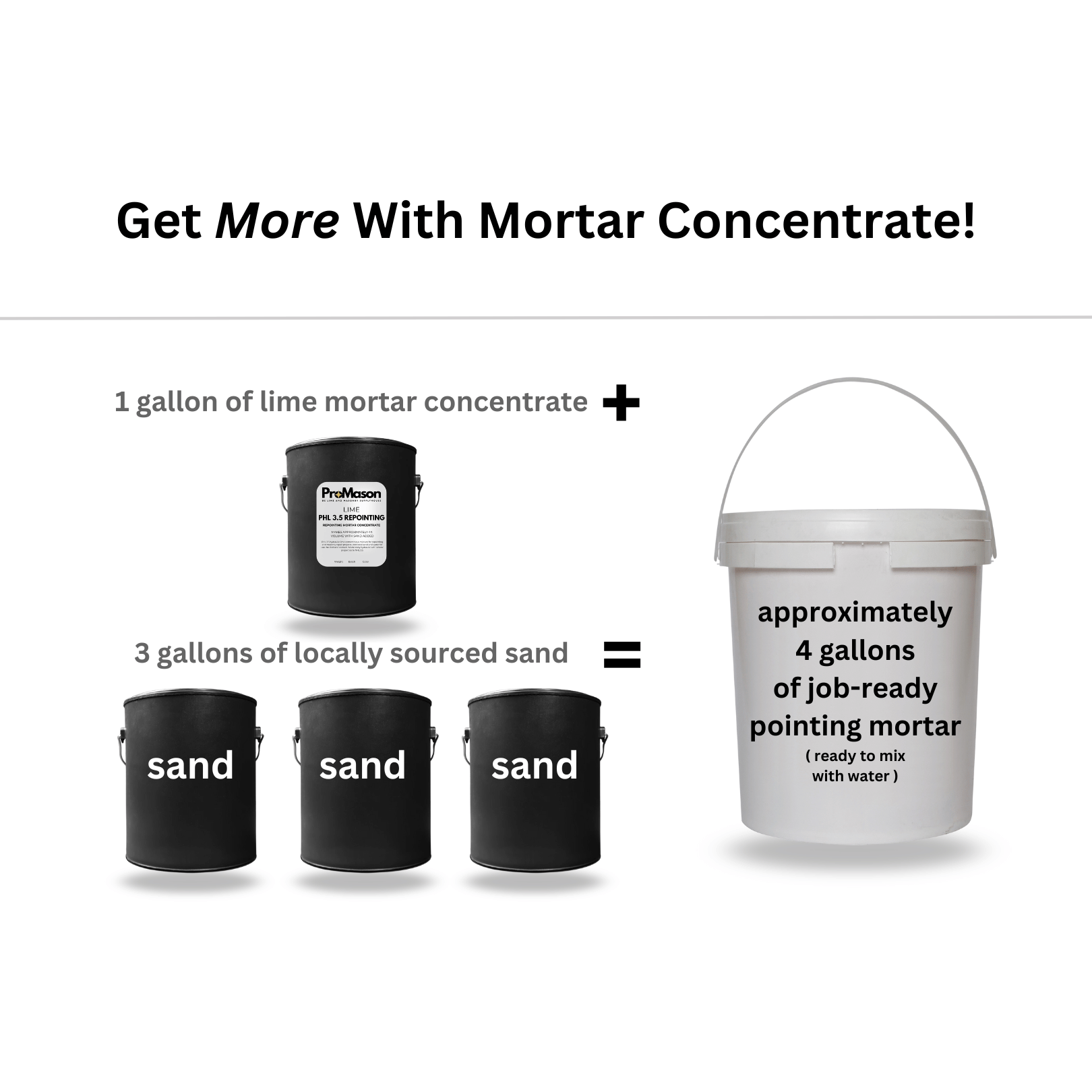
Coverage depends on your wall: brick size, stone pattern, joint width and depth all change how much mortar you need. Coverage is based on concentrate. 1 gallon of concentrate mixed with sand makes about 3.5-4 gallons of mortar. Use the Mortar Estimator below the video on this page to estimate what to order.
Installation Coverage:
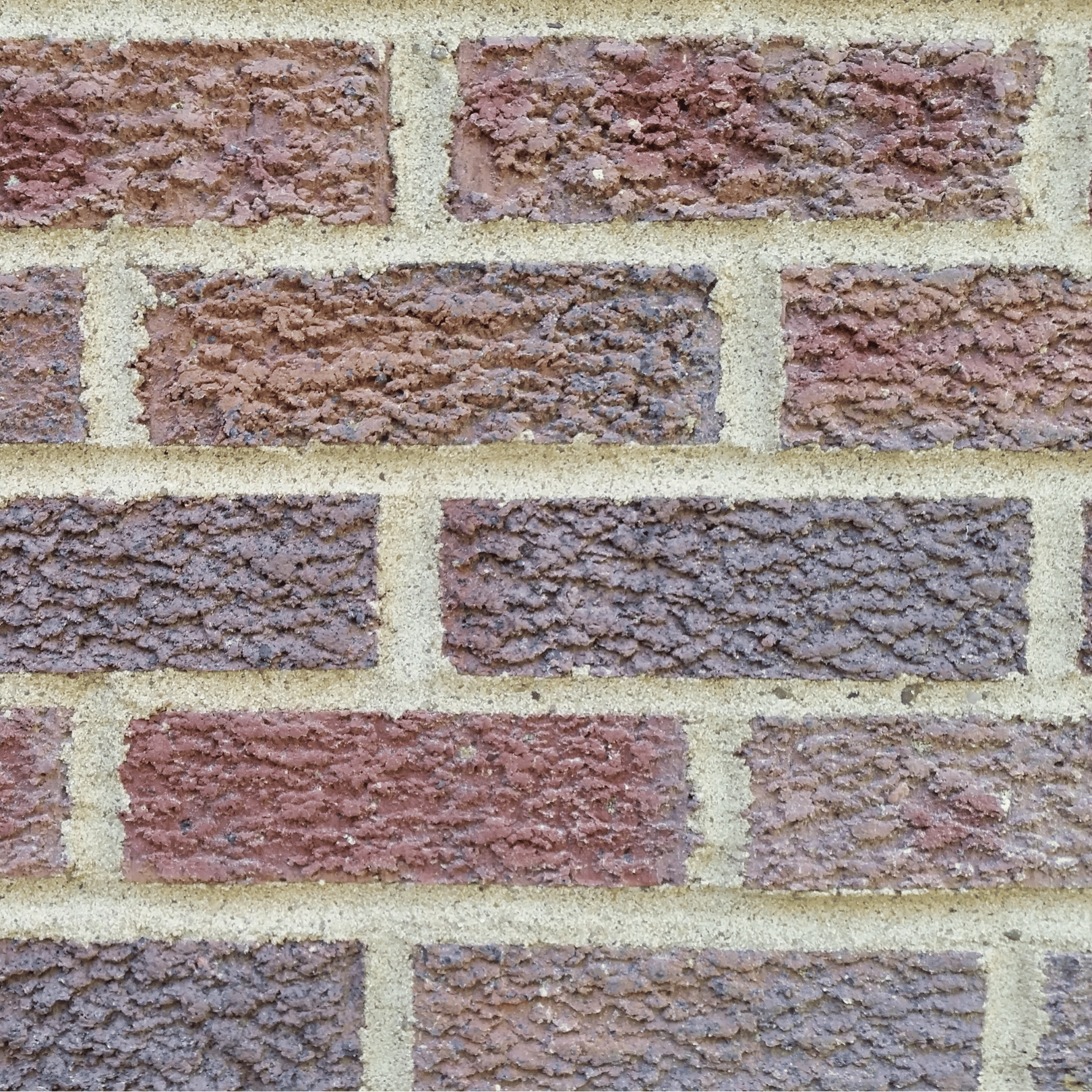
Brick: 24 bricks per-gallon of mortar concentrate
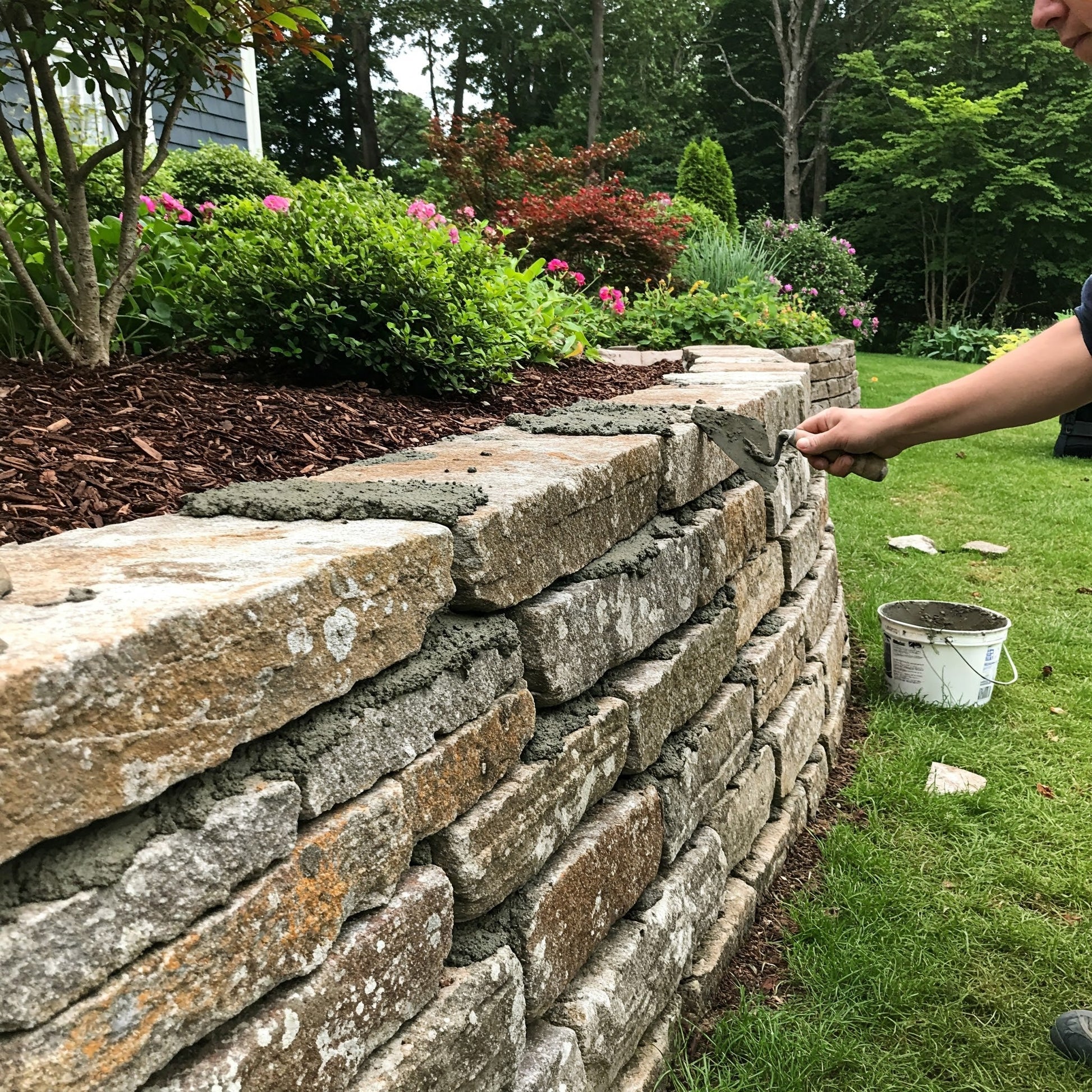
Stone: 2-3 SF per-gallon of mortar concentrate.
Coverage rate estimates are based on materials mixed at a ratio of 1 part mortar concentrate to 3 parts sand. Please note that coverage rates listed are an estimate only.
Need Materials Recommendations?
Need Materials Recommendations?
If you could use a recommendation for materials to sample or use on your project, please don't hesitate to contact us and we'll do our best to help guide you in the right direction!
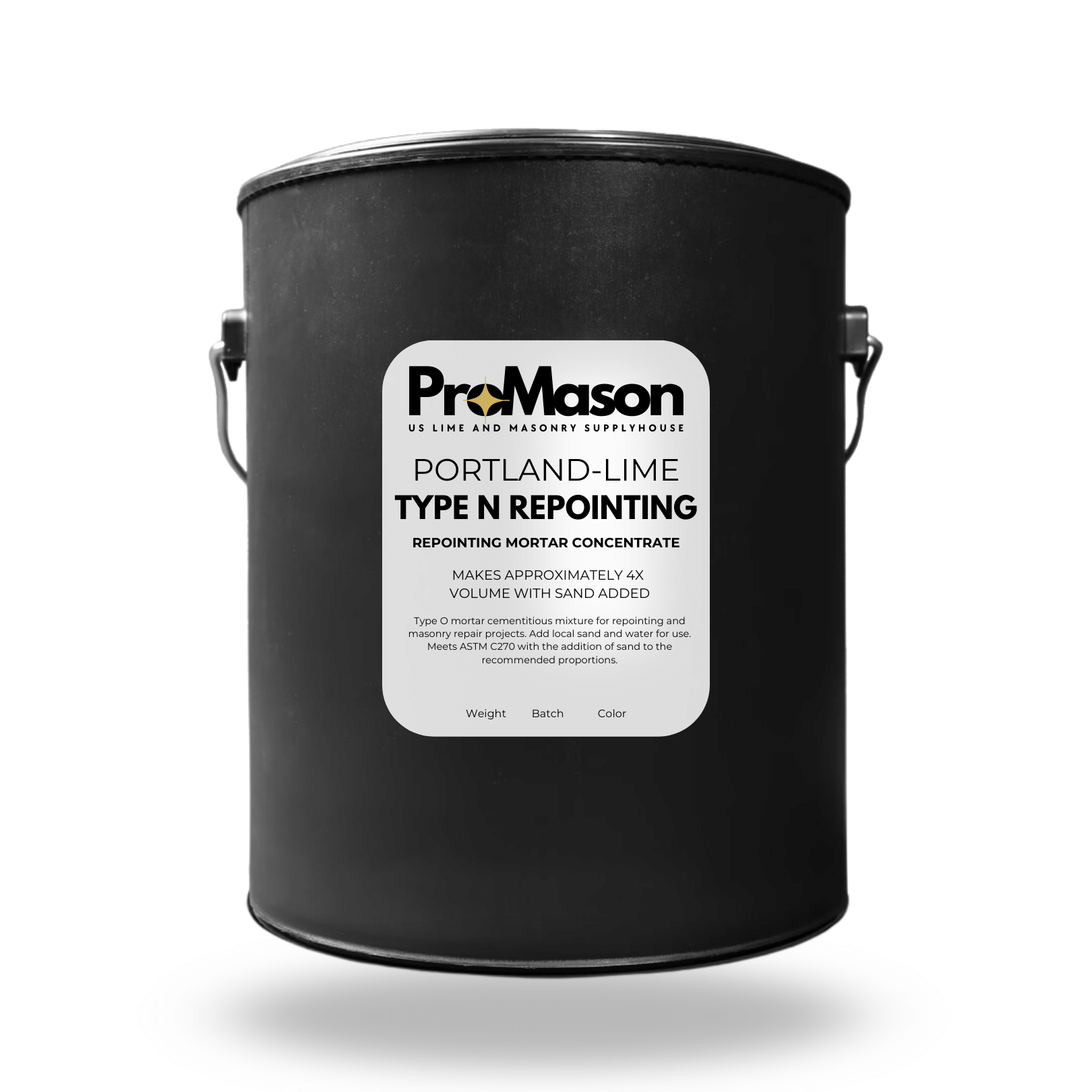
Revitalize the strength and elegance of your masonry structures with our Type N Mortar Lime-Portland Cement Repair mix for brick and stone.
This premium concentrate, available in convenient quart and gallon sizes, is specifically formulated for modern (post 1950) masonry restoration projects. By blending this concentrate with locally sourced sand, you can effortlessly create a durable and aesthetically pleasing mortar, ensuring a seamless and long-lasting repair.
Key Features:
- Balanced Lime-Portland Cement Formula: Our Type N mortar strikes the perfect balance between the flexibility of lime and the strength of Portland cement, making it ideal for a wide range of masonry applications.
- Versatile Quart & Gallon Concentrates: Choose the size that suits your project needs, with each container yielding approximately 4 times its volume in ready-to-use mortar when combined with local sand.
- Breathable for Optimal Moisture Management: The lime component allows your masonry to "breathe," preventing moisture buildup and promoting long-term durability.
- Five Classic Colors:
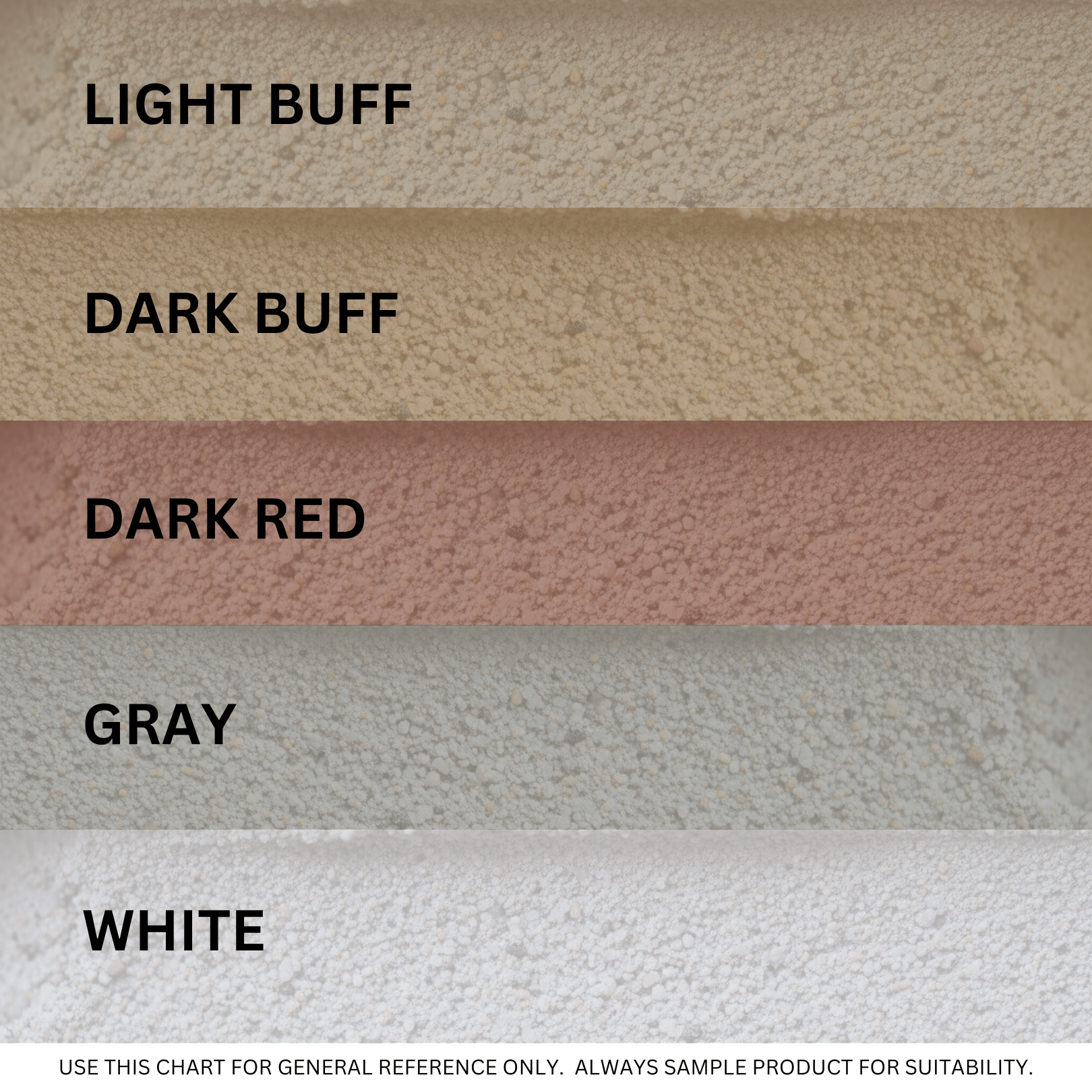
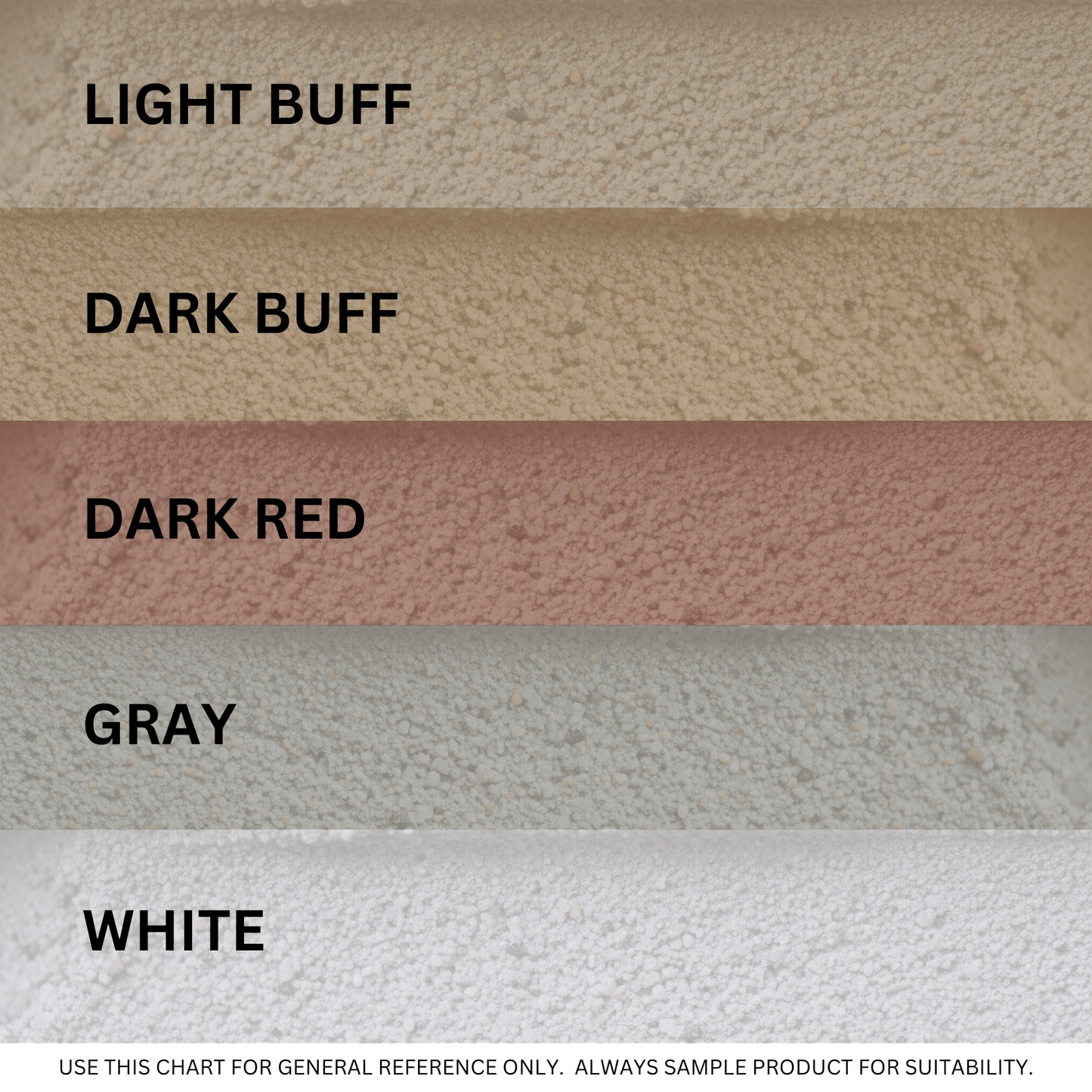
- Select from white, gray, light buff, dark buff, or dark red to help match the original mortar color of your historic structure.
- Easy Mixing and Application: Simply combine the concentrate with sand and water according to the provided instructions for a smooth, workable mortar that is easy to apply.
Ideal Applications:
- Repointing brick, stone, and concrete masonry with modern mortar composition construction from the mid 1940s to current times
- Repairing cracks, gaps, and deteriorated mortar joints
- Matching mortar colors and textures
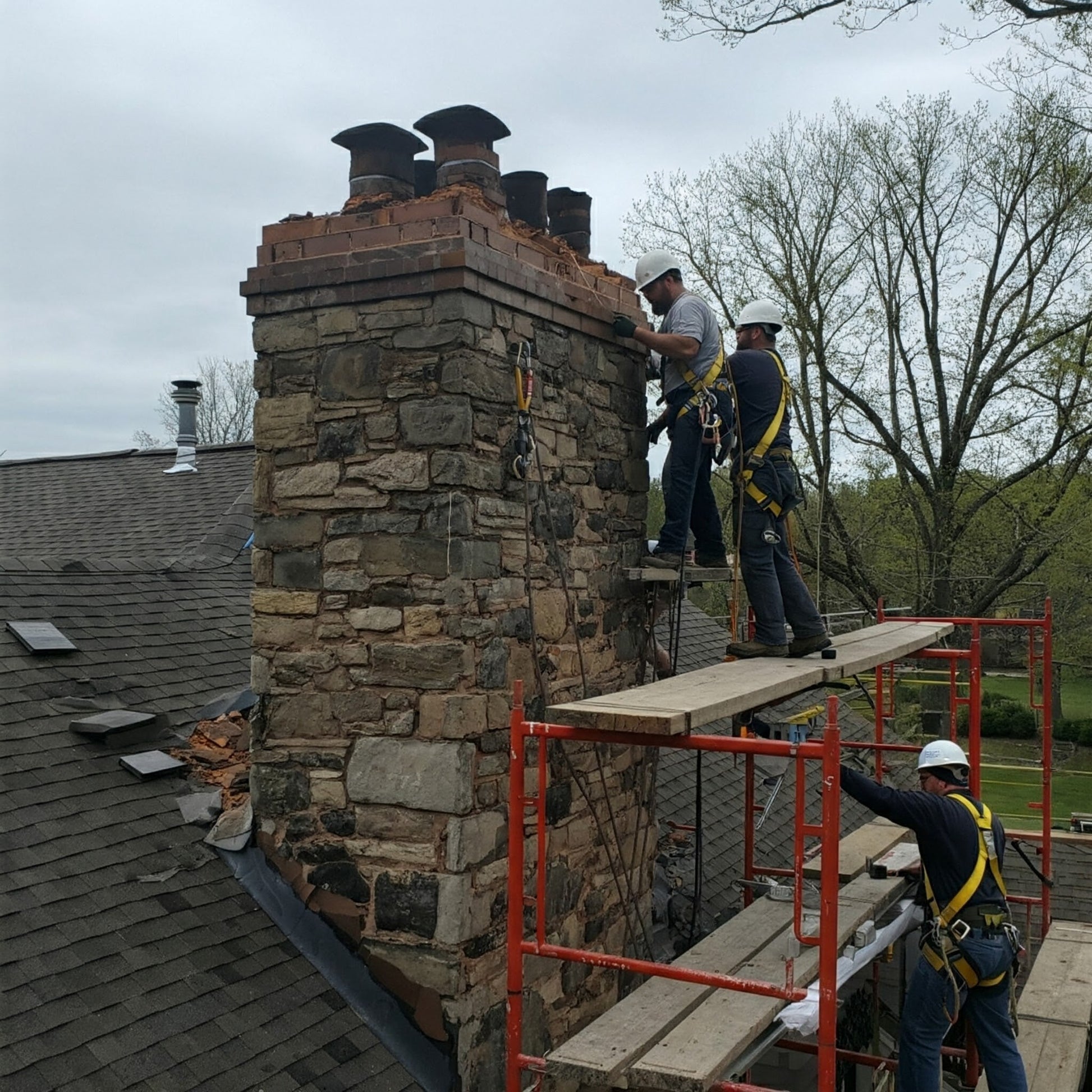
- Restoring the structural integrity and aesthetic appeal of residential, commercial, and some historic buildings
Why Choose Type N Lime-Portland Cement Mortar?
Unlike pure lime mortars, which can be too soft for some applications, and pure cement mortars, which can be too rigid and prone to cracking, our Type N mortar offers the best of both worlds: flexibility, strength, and breathability. By using a versatile and historically appropriate mortar, you ensure the longevity and beauty of your restoration work.
Mixing Instructions:
- Combine one part Type N concentrate with 2.5 to 3 parts clean sand.
- Gradually add water until the desired consistency is achieved.
- Mix thoroughly until the mortar is smooth and homogenous.
Safety Precautions:
- Always wear appropriate safety gear, including gloves and eye protection, when handling mortar.
- Follow the manufacturer's instructions and safety guidelines for proper mixing and application.
Invest in the preservation of your masonry with our Type N Lime-Portland Cement Based Repointing Mortar. Order your quart or gallon concentrate today and experience the difference that quality and versatility can make.



Mortar Mixing Demonstration - Quart-Size Container :
Estimating tool
Mortar Estimator
Answer a few quick questions and we will suggest a mortar and help you estimate how much to order.
Mortar Estimator
Type N Mortar FAQ's
What does "Type N" mean?
"Type N" is a specific classification for mortar designated by the American Society for Testing and Materials (ASTM) in its masonry mortar standard, ASTM C270. It refers to a medium compressive strength mortar (a minimum of 750 psi at 28 days) made from a balanced blend of Portland cement and hydrated lime.
That medium strength is the point. Type N is strong enough for everyday modern brick, stone and block, without being so hard and rigid that it fights the masonry around it the way a higher-strength mortar can.
Our ProMason Type N Mortar Concentrate is made to the ASTM C270 proportion specifications for Type N mortar, using industry-standard proportions, and is designed to meet or exceed the strength for Type N mortar.
Is this the right mortar for my project?
Type N is the mortar for modern masonry. From about 1950 on, Portland cement-lime mortars became the standard, and Type N became the everyday mortar for brick and stone walls. If your building was built after about 1950, and the existing mortar is Portland-based (hard, gray and concrete-like, where a key or the edge of a sharp tool barely marks it), Type N is very likely the right match.
For older buildings, start earlier in our line:
- Before about 1920: a PHL lime mortar (most often PHL 3.5).
- About 1920 to 1950: Type O.
The golden rule of masonry repair still applies: the repair mortar must be softer than the brick or stone it joins, and no harder than the original mortar.
A simple do-it-yourself check before you do the whole wall: break open a loose piece of the old mortar to see its true color and sand, away from the weathered face. Then mix a small batch, point a few joints somewhere out of sight, let them cure, and compare the new joints with the old ones once they're fully dry.
Is Type N a lime mortar?
Type N is a cement-lime mortar: it contains both lime and Portland cement, in the proportions set by ASTM C270 for Type N (roughly equal parts Portland cement and hydrated lime). The lime adds workability and helps the joint handle moisture, while the Portland cement gives it the medium strength a modern wall needs.
Because it contains Portland cement, it is not a lime mortar like our PHL mortars, which contain no Portland cement.
Is this mortar for repointing only?
No. Repointing is its most popular use, but Type N is a general-purpose mortar and can also be used for:
- Laying brick, stone and block: building or rebuilding walls, piers and veneer in modern masonry.
- Setting sills: bedding stone, brick or precast sills.
- Steps: repointing or resetting brick and stone steps where the existing mortar contains Portland cement. (If the existing step mortar is a traditional lime mortar with no Portland cement, use PHL 5.0 instead.)
In every case, match the mortar to the existing work: Type N belongs where the original mortar already contains Portland cement. Type N isn't for paving patios or walkways.
Should I clean the bricks after repointing?
Yes, a final cleaning is an important last step to achieve a professional and tidy finish. It removes the mortar haze, smears and splatters that happen during repointing, and restores the clean, sharp look of the brickwork.
It is vital not to use harsh, aggressive acids (like muriatic acid), which can damage the new mortar joints and the face of the brick.
This is why we developed Pro Mason Mortar Wash. It is a gentle masonry cleaner formulated to dissolve fresh mortar haze and stains without attacking the joints or the masonry. Following the product directions, use it with a soft-bristle brush and a low-pressure rinse to put the finishing touch on your project.
Should I first remove old mortar to a specific depth?
Yes, removing the old, deteriorated mortar to a proper and uniform depth is a key step for a long-lasting repointing job.
The industry-standard guideline is to remove the old mortar to a depth of 2 to 2.5 times the width of the mortar joint.
For example, for a common 3/8" wide mortar joint, excavate the old mortar to a depth of at least 3/4" to 1". A plugging chisel is a useful tool for this.
Why is this depth recommended? It gives the new mortar enough surface area to create a solid mechanical bond and lock itself into place. A shallower application may not be as durable and can be more prone to early failure from weather and freeze-thaw cycles.
Keep removing old mortar until you reach a solid, sound base, even if that is deeper than the guideline. Take care not to damage the edges (arrises) of the brick or stone.
Does this mortar require special curing methods?
Yes. Type N gains its strength as the Portland cement hydrates and the lime slowly cures, and both need moisture. If the joints dry out too fast, they won't reach their full strength. For the best results:
- Keep it damp: lightly mist the new joints with water daily for at least 3 days. Damp burlap helps hold the moisture in.
- Protect from weather: shield the wall from intense sun, high winds and heavy rain while it cures.
- Avoid freezing: protect the work from freezing for 1 week after application. Plastic sheeting can be used for light frost protection at night during this time.
Is this mortar suitable for any size mortar joint?
Yes, but match the sand you mix with our concentrate to the joint size. Mix 1 part Type N concentrate with 2.5 to 3 parts clean sand, then add water gradually until the mortar is smooth and workable. The general guideline is that the largest sand grain should be no more than one-third of the joint's width.
- For narrow joints (under 3/8"): mix our concentrate with a fine masonry sand (such as ASTM C144) to ensure a tight, complete fill.
- For wide stone joints (over 3/4"): mix our concentrate with a coarse, well-graded sand. This gives the mortar the stability it needs and helps control shrinkage in larger gaps.
Is this mortar for both brick and stone?
Yes. Type N mortar can be used for brick, stone and concrete block projects.
Let customers speak for us
Excellent experience with all questions answered!
I purchased a type-o mortar concentrate and am very satisfied with the speed of receipt and overall quality of the final product. I particularly appreciated the clear instructions that came with the product that took any guess work out of the picture. I am a homeowner and not a professional mason but this company has allowed me to make reasonable repairs to my chimney brick work with confidence.
A very nice product, really looks great to brighten up older bricks. AAA+++
Excellent product, and helpful tips from ProMason Supply! Thank you, the lime Morter works perfectly for our historic 130 year old home, we have some major tuck pointing and repairs to the masonry to do. your company and product is very appreciated!

arrived quickly, great product

Product worked well.
My tile/mason guy convinced me to not add any color to my mortar and it drove me insane that I let him talk me out of my vision. I just put the Cream stain on my grout for my bricked floor in my mudroom and I can't begin to tell you how happy I was with the result. We ended up using it strait and didn't water it down. There were some areas that absorbed super quickly and needed a second coat. I can't wait to seal it in to protect it.
Ordered type O mortar for a historic stone foundation repair. Product was just what we needed and this is one of the only places it is available. Thanks !
Fast delivery. Glad this company/resource exists.
My product arrived promptly and neatly, and it did the job toning down the too-orange bricks on my front porch!
This product did exactly what I had hoped for. I had a brick look tile floor that I wanted to distress to a German schmear type of look. I originally left too much on for my liking… my schmear was a little too schmearing!! But Goo Gone Graffiti Remover and a scrub brush did the trick. So happy I found this product. First pic is final results, second pic is original floor, and third was the too much in the middle.
I mixed dark buff, white clay and water (each 1 part ratio). The result was awesome and so easy to use. Applied to stone and grout to soften the gray tone of the creekstone fireplace to appear more beige/soft tan. Love it and highly recommend!
Pro Mason Supply made getting the correct product easy, they offered details and assistance if needed. The offer for support after the sale helped me decide they would be my best option. My house was built in 1870, so it requires specific repair material.
I am confident that if I need additional assistance, Product Mason will provide it.
Pro Mason was very easy to work with. Products showed up on time and worked well on the application.
Great product, it really exceeded my expectations. It was easy to apply and the new color looks original. I can't tell it was applied to the brick 60 years after they were manufactured. I wouldn't hesitate to recommend it to friends and family.
