
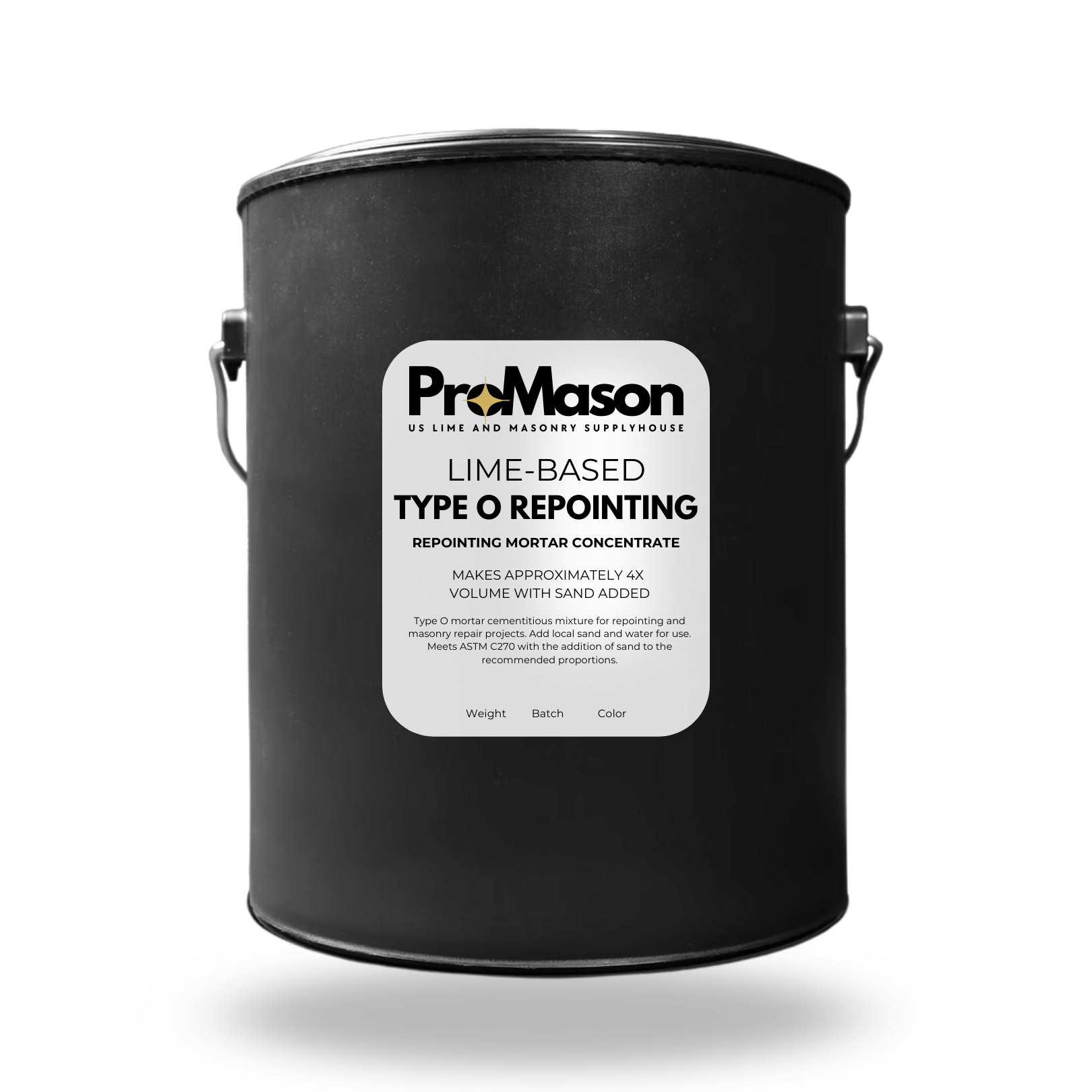


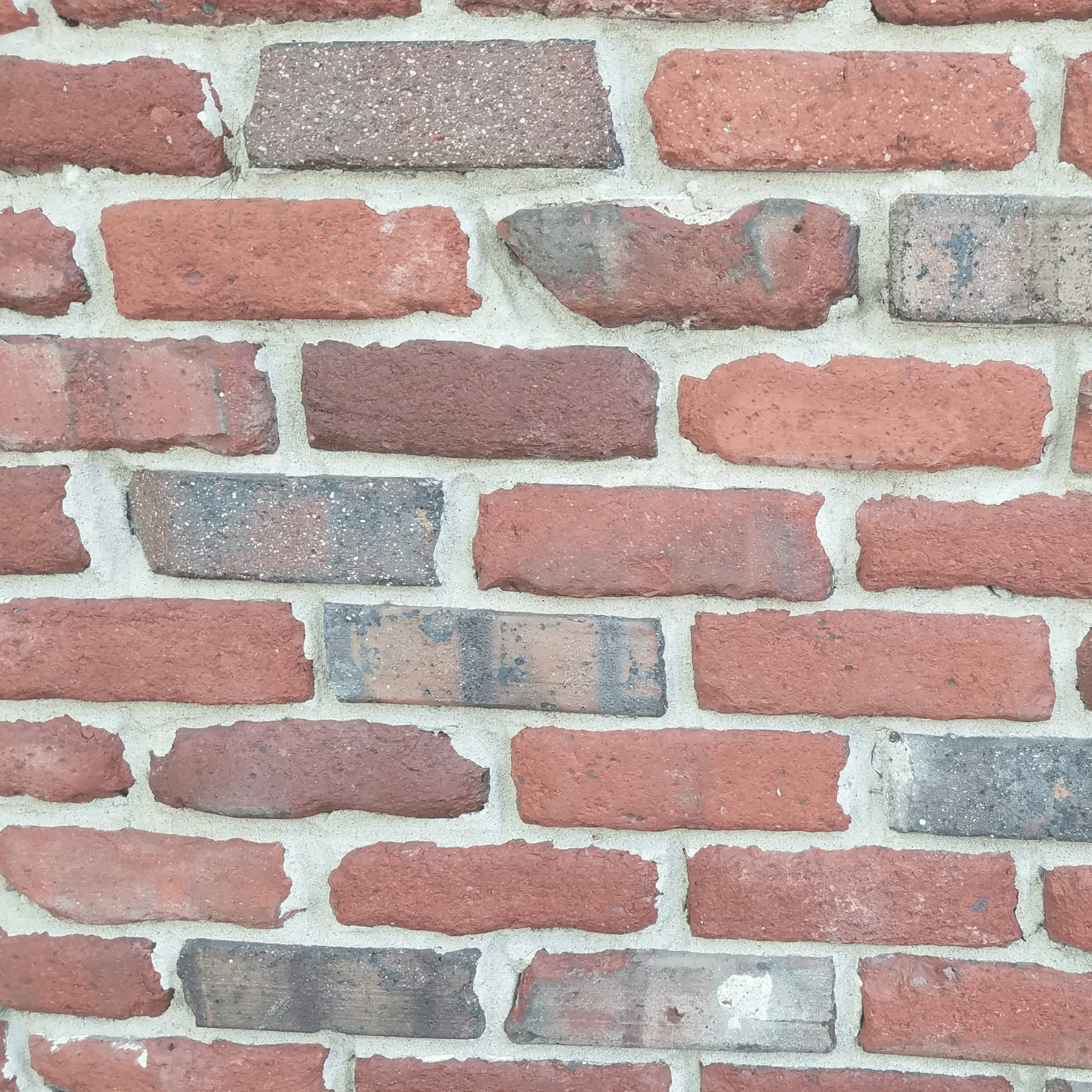
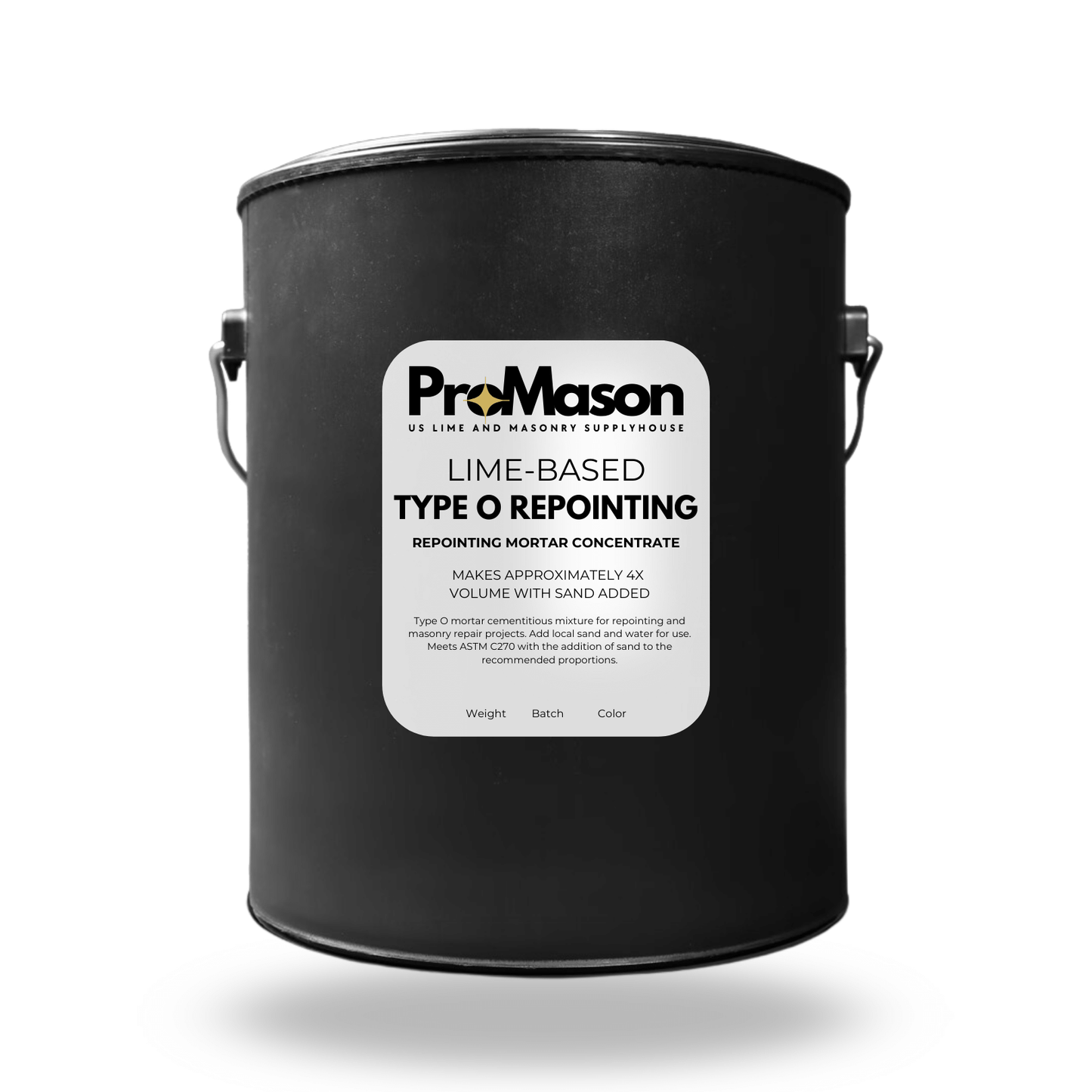
Type O Mortar - Brick & Stone Concentrate
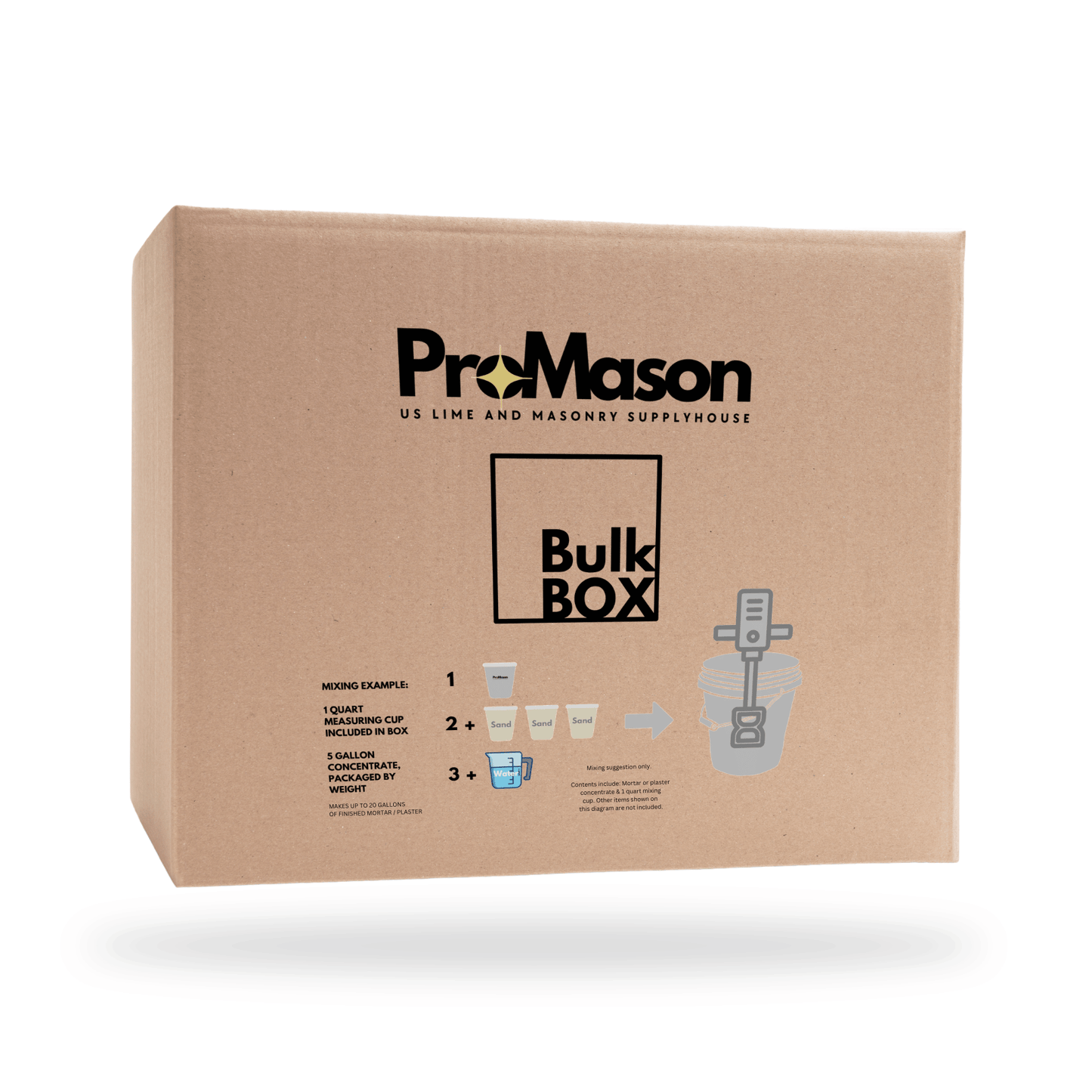
Type O Mortar - Brick & Stone Concentrate5-gallon bulk box = five 1-gallon cans' worth of concentrate.
Not sure of the color? Pick the Quart – Sample & Small Project Size to test it at home before the full order.
Shipping & returns
- Ships from Olathe, Kansas by UPS, usually within 1–2 business days.
- Rates are quoted live at checkout for your ZIP code.
- Items with a pallet option ship free on the pallet size. For large orders of other items, contact us.
- We deliver to UPS addresses in the continental US.
- Returns or a damaged order? See our Return & Refund Policy.
Part of The Pro Mason System. Clean, repair, protect: see how it works · project guides · FAQ
Couldn't load pickup availability
Coverage
Coverage
Repointing Coverage:
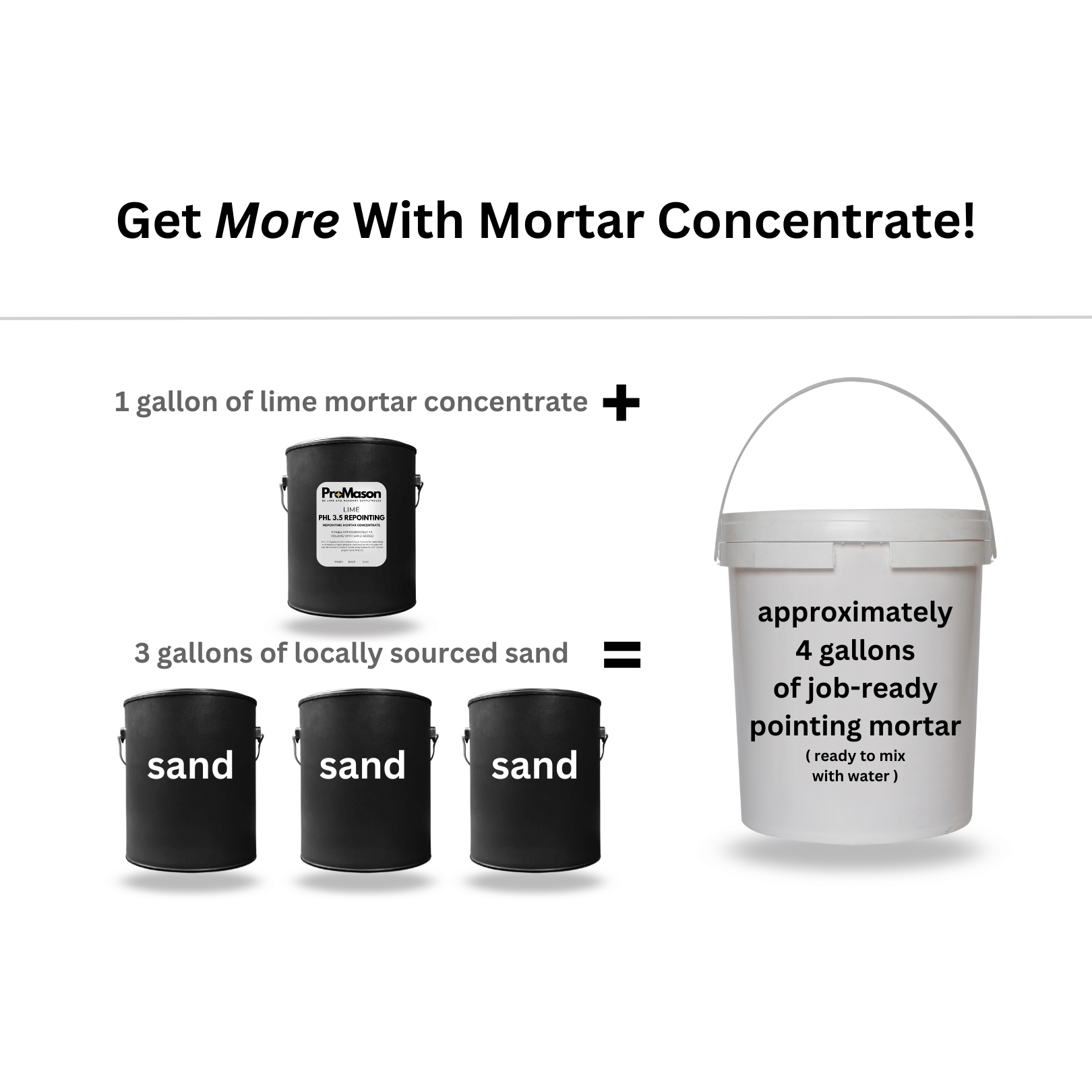
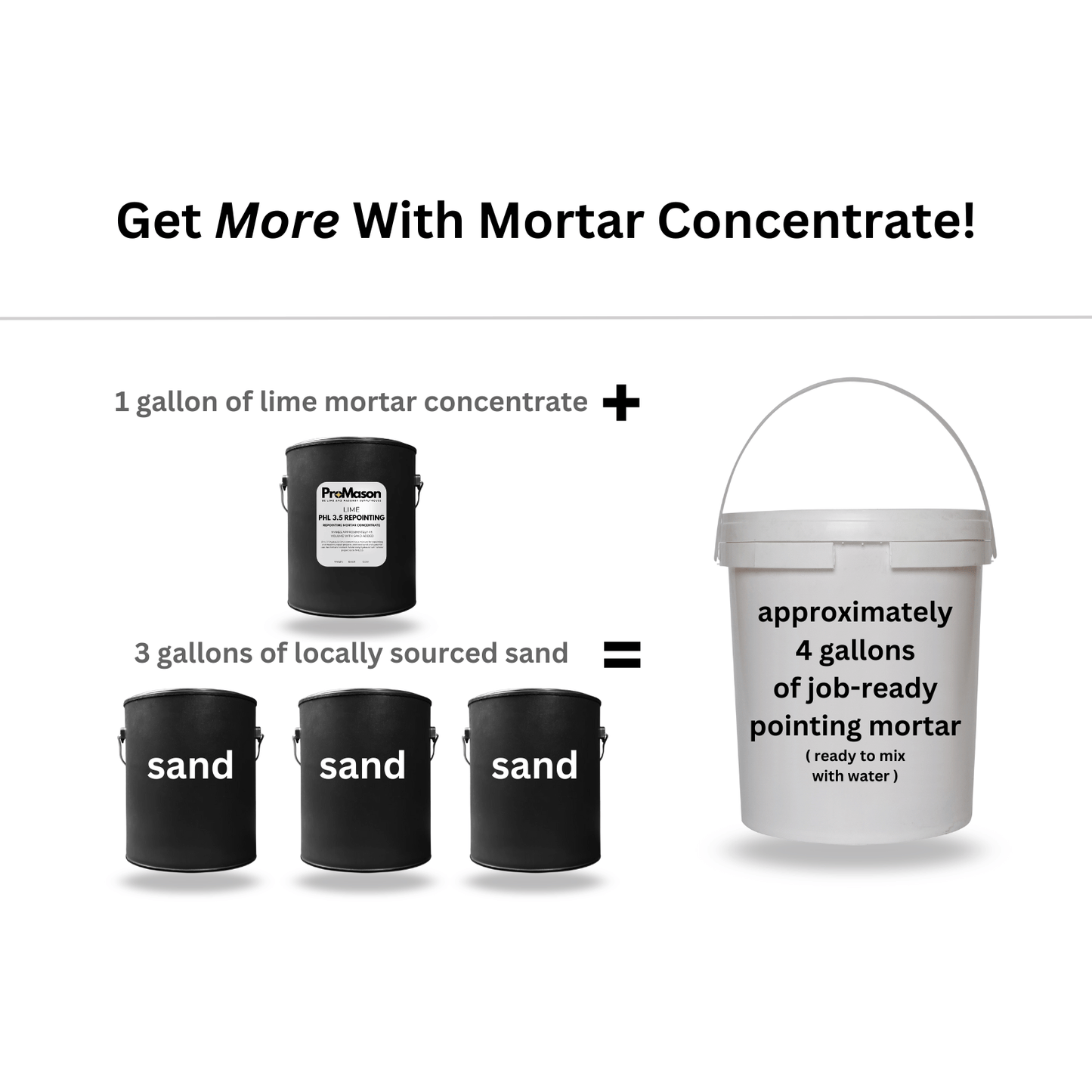
Coverage depends on your wall: brick size, stone pattern, joint width and depth all change how much mortar you need. Coverage is based on concentrate. 1 gallon of concentrate mixed with sand makes about 3.5-4 gallons of mortar. Use the Mortar Estimator below the video on this page to estimate what to order.
Installation Coverage:
Brick: 24 bricks per-gallon of mortar concentrate
Stone: 2-3 SF per-gallon of mortar concentrate.
Coverage rate estimates are based on materials mixed at a ratio of 1 part mortar concentrate to 3 parts sand. Please note that coverage rates listed are an estimate only.
Not sure which to pick?
Not sure which to pick?
Tell us about your project and the year your home was built, and we'll suggest a good place to start. Ask us here.
Pick Type O if you're repointing brick or stone from the transition era, about 1920 to 1950, when lime mortars first took on a little cement.
| Product | Best for |
|---|---|
| PHL 2.0 | Soft or fragile brick in sheltered spots |
| PHL 3.5 | Most lime-laid walls built before about 1920 |
| PHL 5.0 | Exposed lime-laid spots: chimneys, parapets, steps |
| Type O (this one) | Transition-era walls, about 1920 to 1950 |
| Type N | Walkways, patios, and walls where the old mortar is hard |
Older, pure lime-laid wall? Use PHL 3.5. Walkway, patio or hard existing mortar? Use Type N. Type O is generally not for walkways and patios.
- Transition-era grade - sits between our pure lime PHL grades and Type N. Formulated by proportion to the ASTM C270 Type O proportion specification.
- Lime-rich and breathable - lets the wall dry out instead of trapping moisture.
- Mix with your sand - 1 part concentrate to 2.5 to 3 parts clean sand.
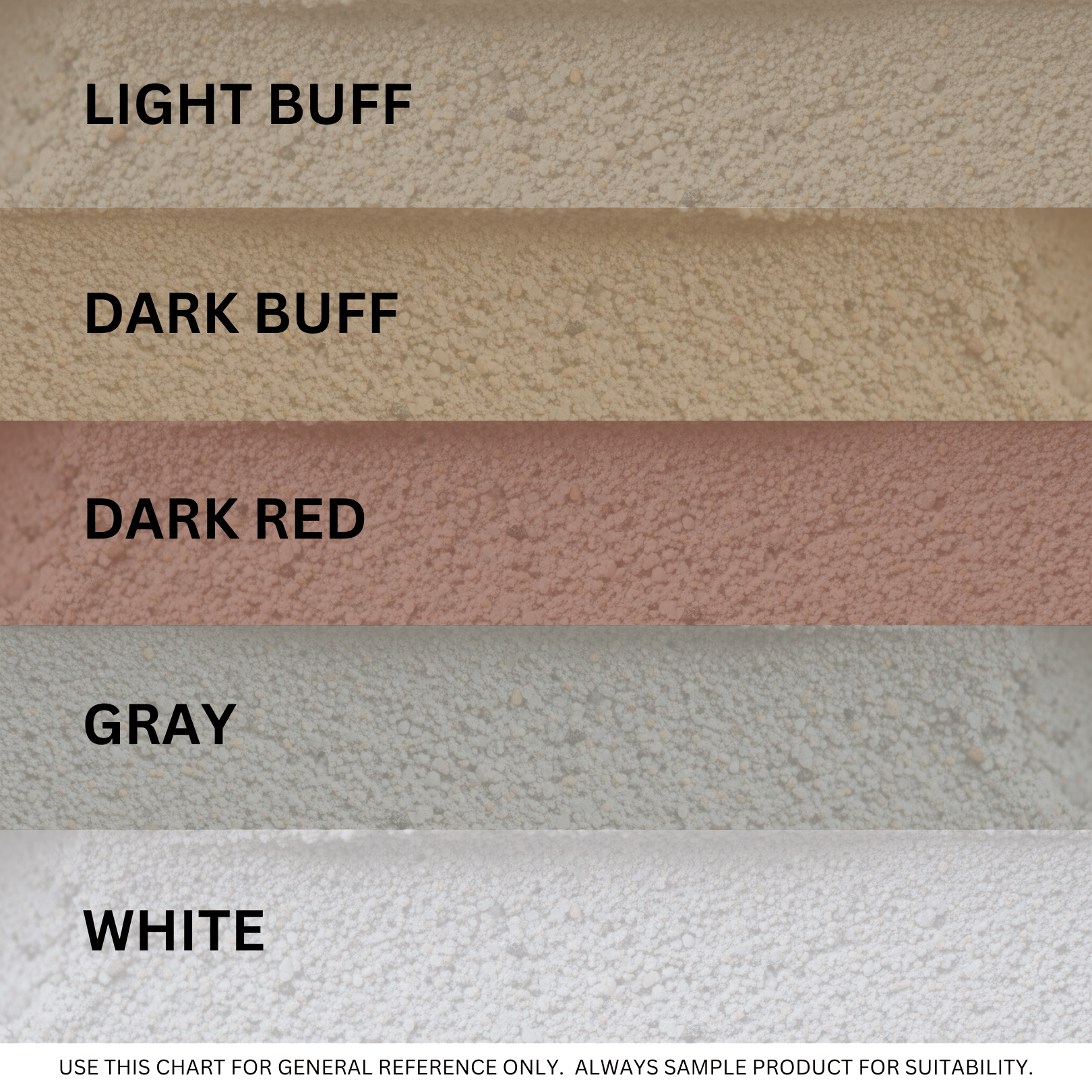
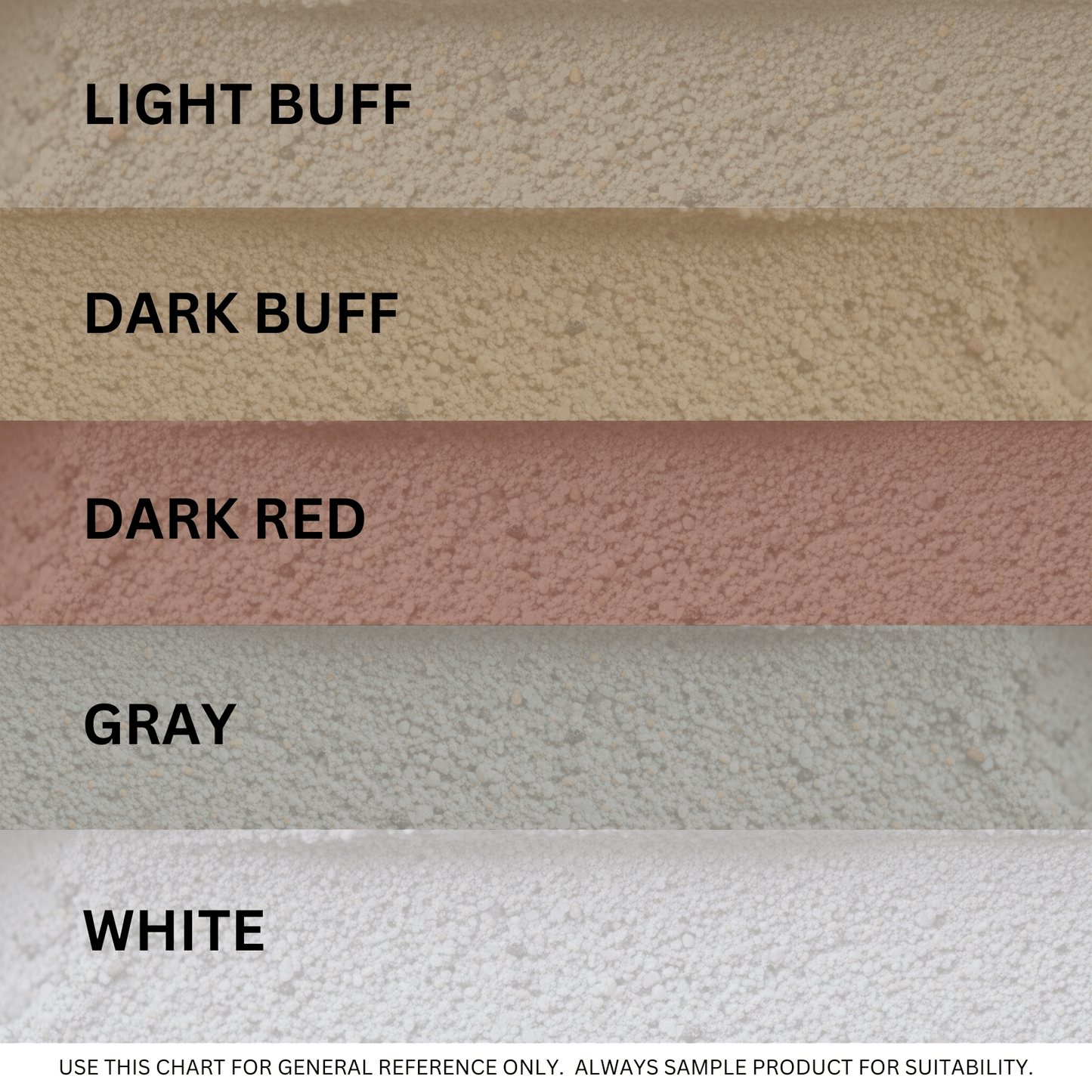
- Five colors - White, Gray, Light Buff, Dark Buff or Dark Red; add the color pack during the dry blend.
How the job goes
- 1. Match. Check the old mortar's color and sand, then mix a small test batch.
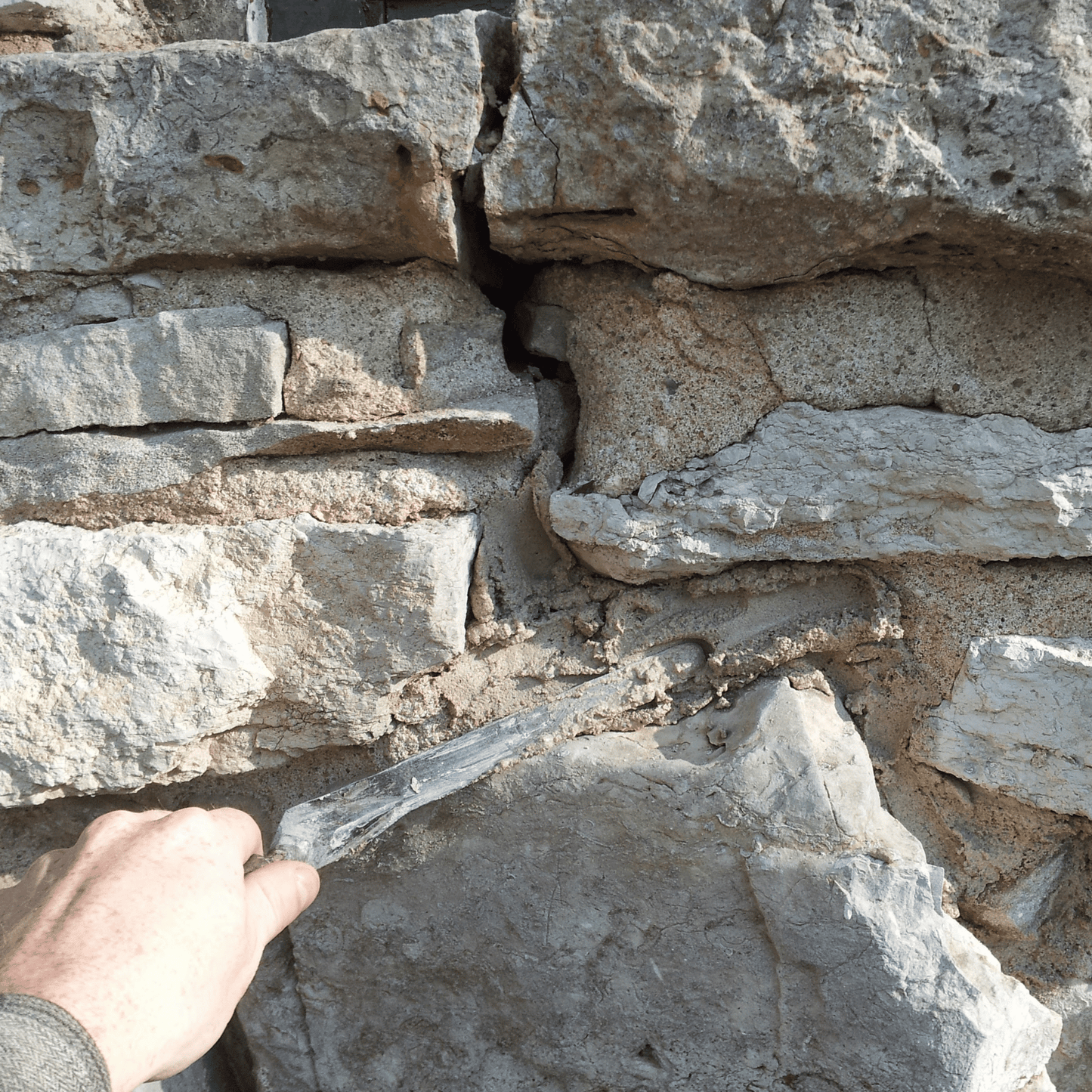
- 2. Rake. Remove old mortar to about twice the joint's width, down to a sound base.
- 3. Repoint and cure. Pack and tool the joints, then damp cure for about 24 hours, shaded from sun and wind.
Sizes
- Quart (sample and small projects)
- Gallon (standard size)
- 5 Gallon box (makes up to 20 gallons of mortar)
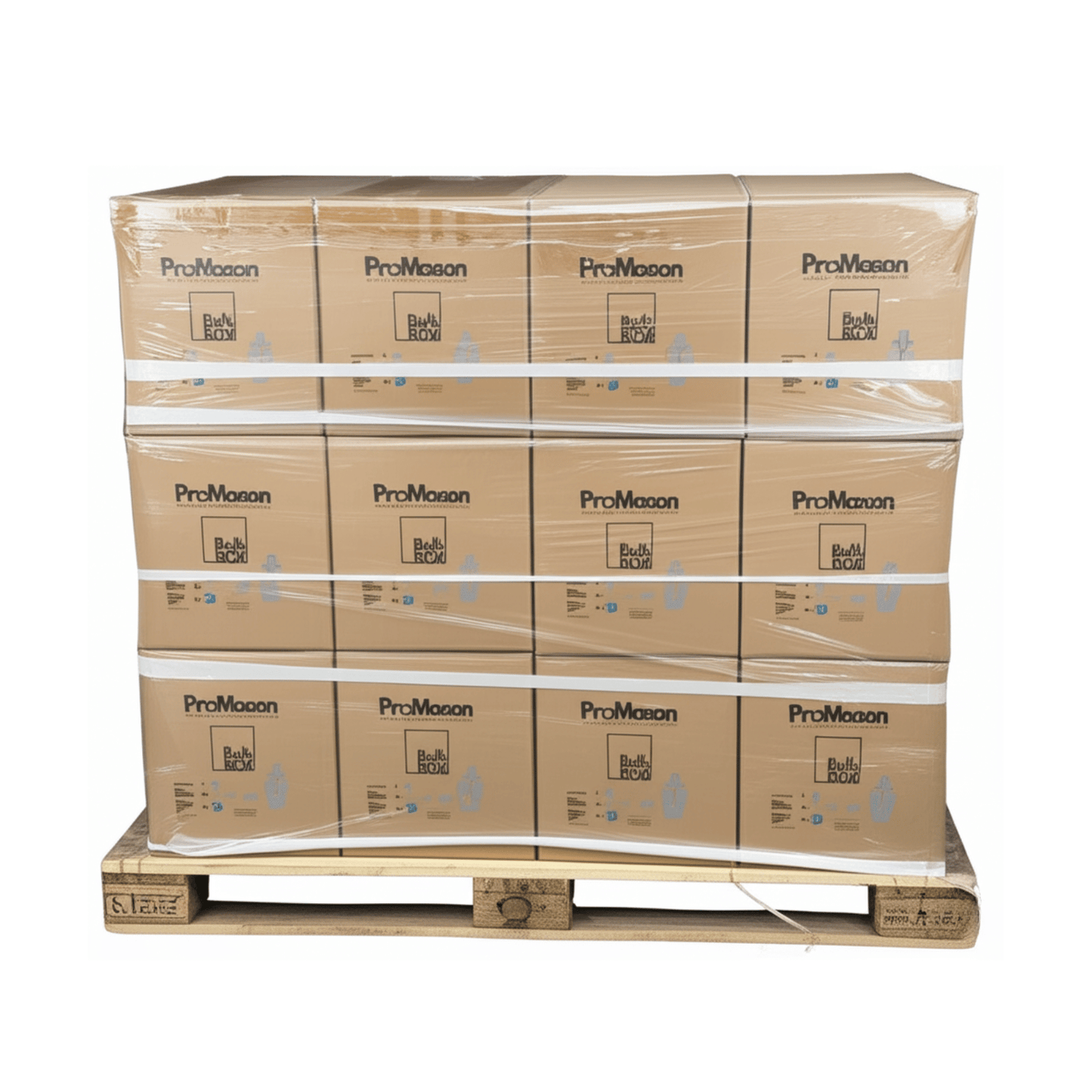
- Pallet of 48 five-gallon bulk boxes, free shipping
Safety: wear gloves and eye protection when mixing and handling.
More about Type O
Between about 1920 and 1950, masons began adding small amounts of cement to their lime mortars. Walls from that era sit between two worlds, and Type O is made to match them: still lime-rich, still breathable, and gentler on old brick and stone than a modern cement mix.
Mix one part concentrate with two and a half to three parts clean sand, adding water gradually until the mortar is smooth and workable. One part concentrate makes about four parts of mortar. Point a few test joints somewhere out of sight and let them dry before you compare colors. Add the color pack while you dry-blend the concentrate and sand; use less of it for a lighter shade. We recommend working when it's above 40°F, and protecting fresh work from freezing while it cures.
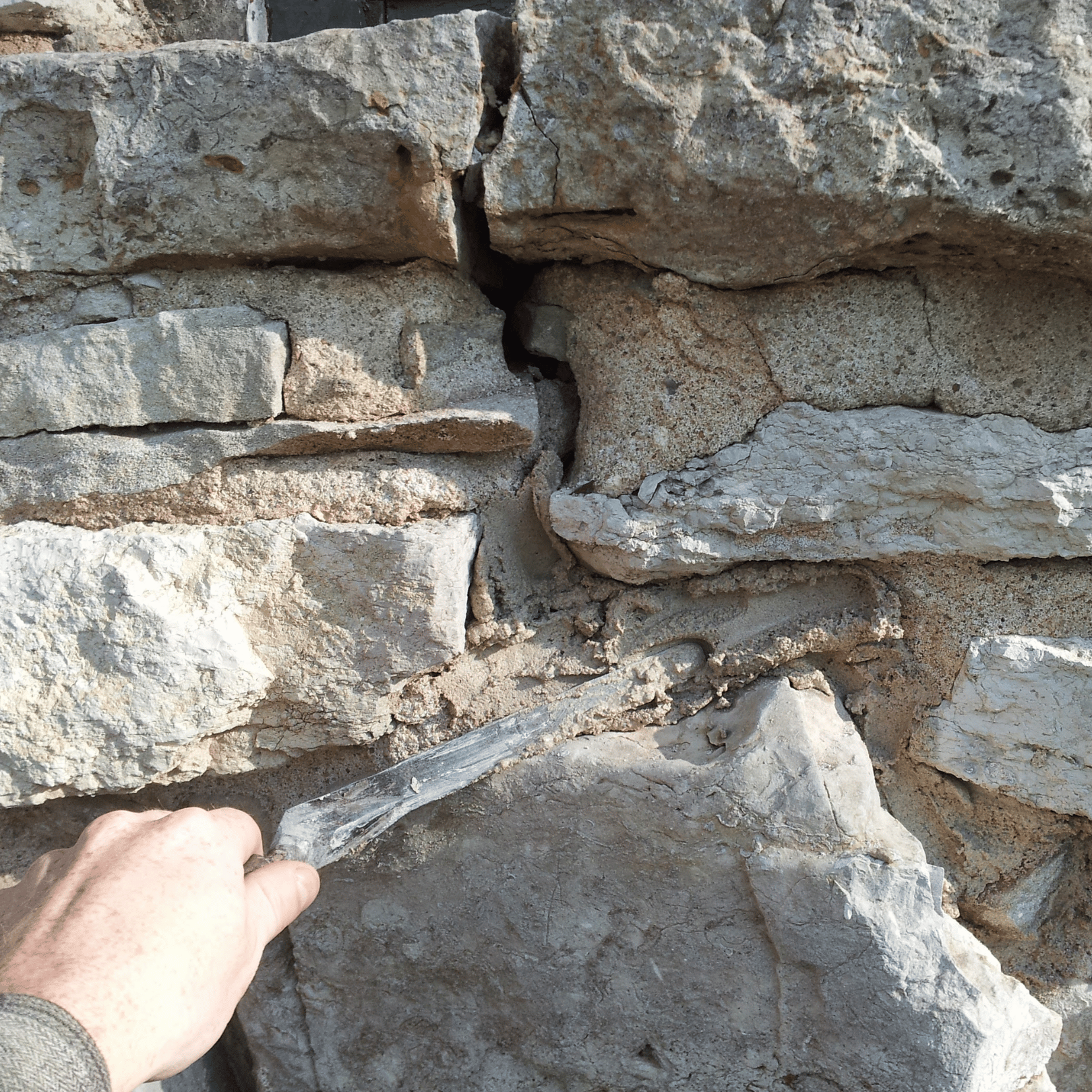
Rake the old joints to about twice their width, brush out the dust and dampen the masonry before you start. Pack the joints firmly, tool them to match the surrounding wall, and damp cure the fresh work for about 24 hours, out of direct sun and wind.
If the wall is older and laid in pure lime, one of our PHL grades is the better match, starting with PHL 3.5. For walkways, patios, or walls where the existing mortar is hard, use Type N. Once the joints have had their initial cure, Mortar Wash removes any haze left on the face of the brick or stone.


Watch: mixing a quart batch at home
Estimating tool
Mortar Estimator
Answer a few quick questions and we will suggest a mortar and help you estimate how much to order.
Mortar Estimator
Mortar color visualizer
See each shade on a wall
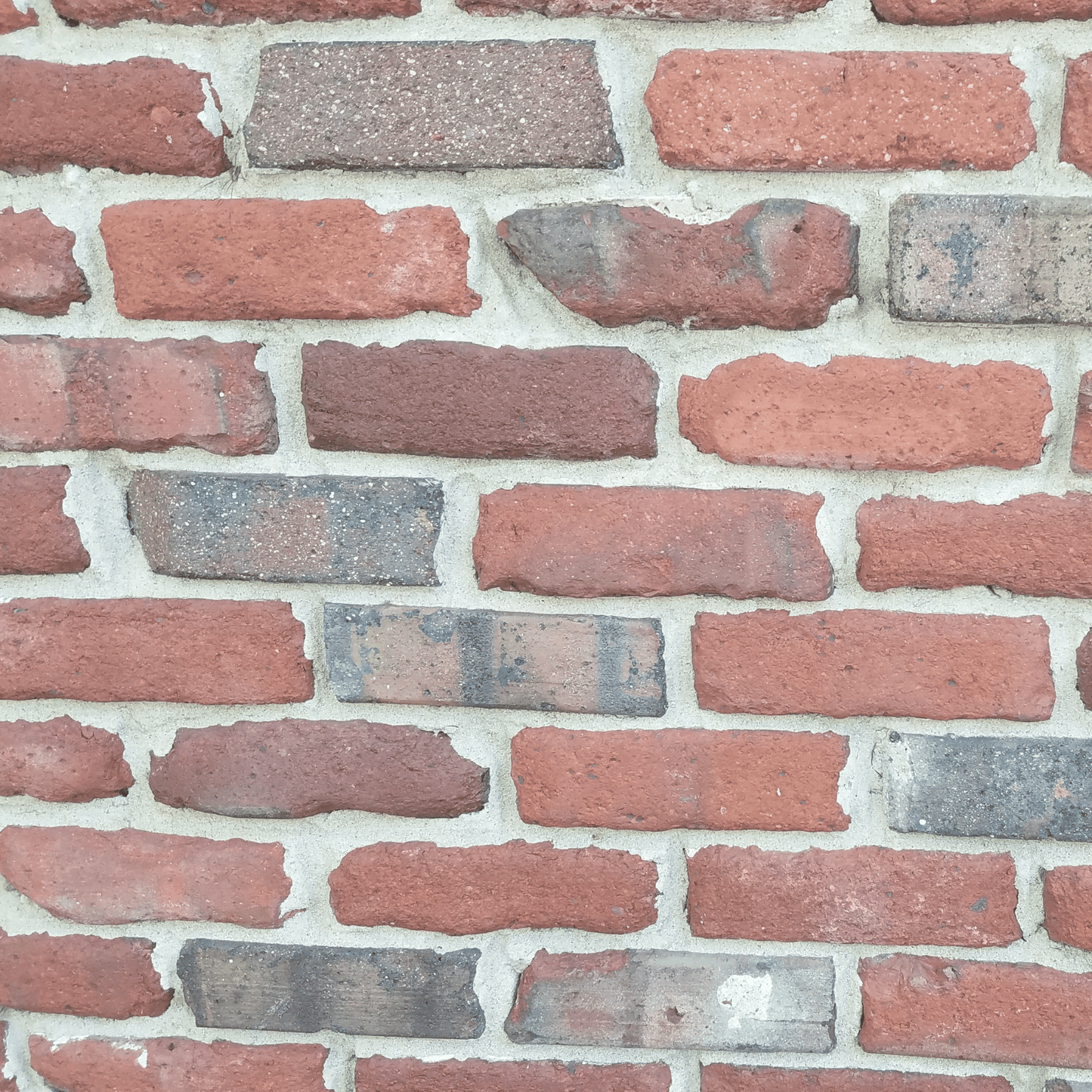
Tap a shade to see it in brick or stone joints. Tapping a shade also picks that color above.
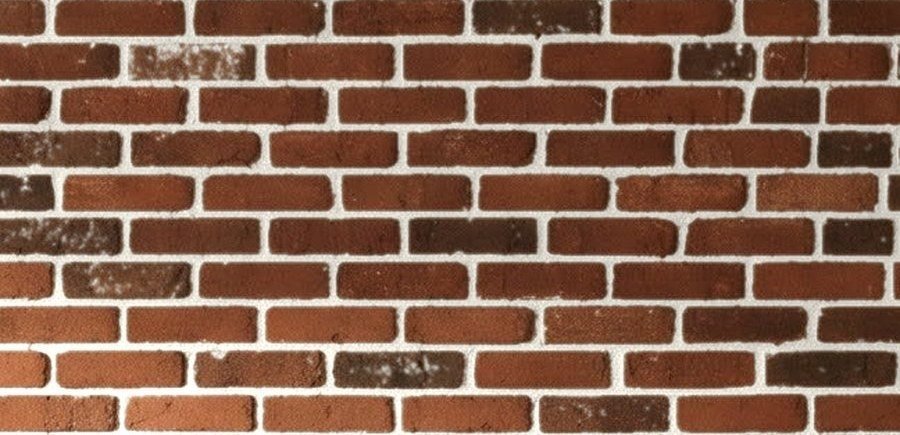
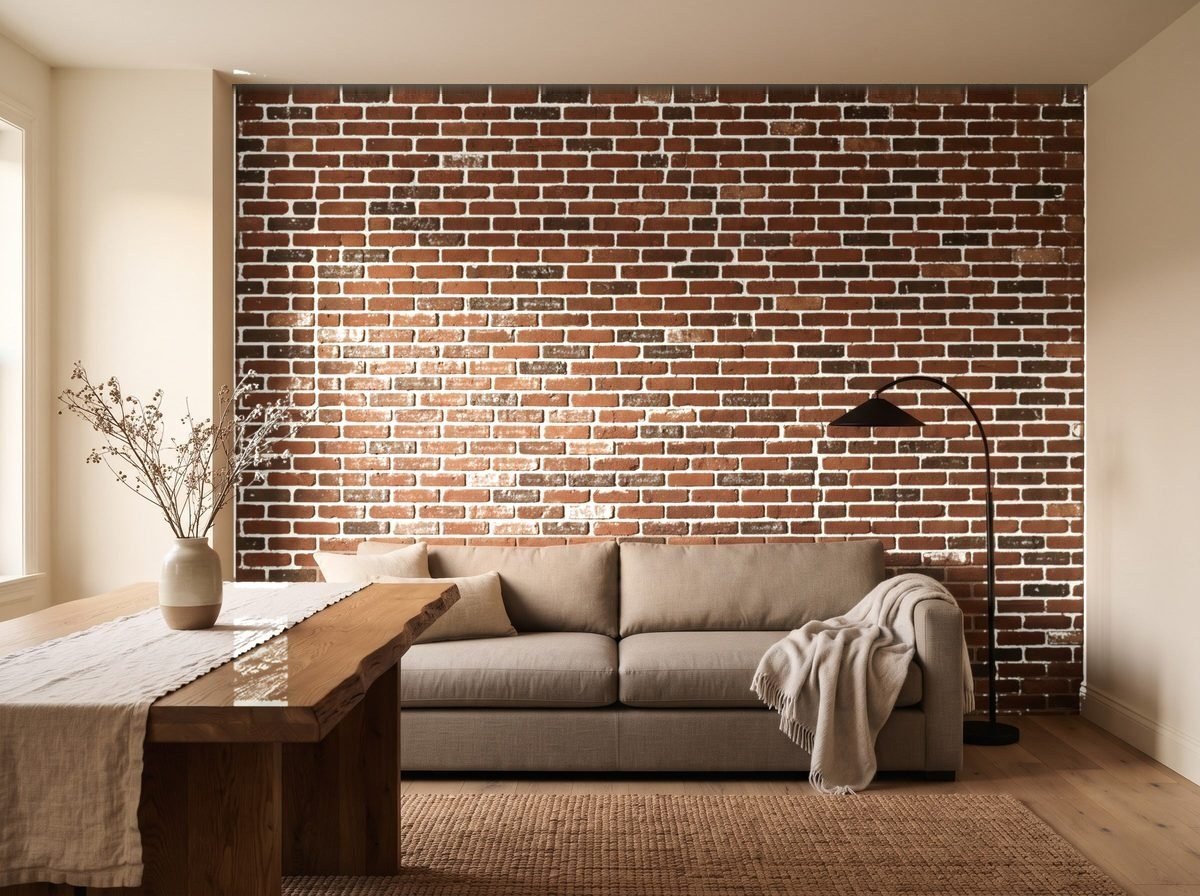
For illustration only. Order a color sample to see the actual color.
Adjust the color to suit your project. Color packs come packaged separately from the mortar, so you can use less for a softer, less saturated shade, or add an extra color pack (sold separately) for a richer one.
Type O Mortar questions, answered
What does "Type O" mean?
"Type O" is a specific classification for mortar designated by the American Society for Testing and Materials (ASTM). It refers to a mortar mix with a low compressive strength (a minimum of 350 psi) and high lime content.
This low strength is a crucial feature, not a flaw. Type O mortar is intentionally designed to be softer and more flexible than the masonry units it's used with, such as historic, handmade bricks or soft natural stone.
Why is this important? In older buildings, a soft mortar acts as a sacrificial element. It absorbs movement and stress, protecting the more valuable and often irreplaceable brick or stone from cracking and spalling. It's also highly breathable, allowing moisture to escape from the wall, which is essential for the long-term health of historic structures.
Our Pro Mason Type O Lime Based Mortar Concentrate is specifically formulated for these applications, ensuring you have the right material for gentle and effective historic masonry restoration.
Is this the right mortar for my project?
Type O mortar is considered a "transition mortar". This is when older pure-lime mortars were being transitioned to our modern hard-cement mortars. Often a lime mortar was modified by adding a small amount of cement to make it set faster and harder than the old lime mortars. If your building was built between 1920 - 1950, there is a good chance that this mortar is appropriate for that structure.
The golden rule of masonry restoration is that the repair mortar must be softer than the original masonry units. Type O mortar is designed to be soft and flexible, ensuring that it won't damage delicate, historic materials.
One way to do a simple field-test to help determine if pure lime mortar or Type O is useful is to scratch the surface of your mortar with the edge of a sharp tool. If it scratches or crumbles very easily, it's likely a pure lime mortar (not Type O). If it is harder and concrete-like (and from this approximate time period), you will likely want to use Type O.
Is Type O a lime mortar?
Type O is considered a high-lime or lime-based mortar.
Type O mortars are formulated under ASTM C270 specifications to have a high proportion of hydrated lime relative to cement. This mixture is useful for restoration work for the transition time period from the old lime mortars to modern high-strength masonry mortars.
While it is dominated by the characteristics of lime, the inclusion of a small amount of Portland cement means it is not a pure lime mortar (like our PHL mortars), which contains no cement at all.
Is this mortar for repointing only?
No, its use is not limited to repointing, although that is its primary and most popular application. The gentle strength and high breathability of Type O mortar make it suitable for several other applications involving historic masonry.
It is also an excellent choice for:
- Laying Brick and Stone: Type O is the appropriate mortar for laying or re-laying soft, historic bricks or porous natural stone. The key is to ensure the mortar's strength is compatible with the masonry units.
- Bedding and Setting: It can be used to set stone sills, lintels, and coping stones on historic structures where a soft, forgiving mortar is required.
In all these applications, the guiding principle is the same: Type O is used where a softer, breathable, lime-rich mortar is needed to protect and work in harmony with older, more delicate masonry substrates.
Should I clean the bricks after repointing?
Yes, a final cleaning is an important last step to achieve a professional and tidy finish. This process removes the inevitable mortar haze, smears, and splatters that occur during repointing, restoring the clean, sharp appearance of the brickwork.
For this delicate task, it is vital not to use harsh, aggressive acids (like muriatic acid), which can permanently damage both the new lime mortar and the face of historic bricks.
This is why we specifically developed Pro Mason Mortar Wash. It is a gentle masonry cleaner formulated to safely dissolve fresh mortar haze and stains without attacking the integrity of the joints or the masonry.
Following the product directions, use it with a soft-bristle brush and a low-pressure rinse to put the finishing touch on your restoration project
Should I first remove old mortar to a specific depth?
Yes, removing the old, deteriorated mortar to a proper and uniform depth is a key step for achieving a long-lasting repointing job.
The industry-standard guideline is to remove the old mortar to a depth of 2 to 2.5 times the width of the mortar joint.
For example, for a common 3/8" wide mortar joint, it's recommended to excavate the old mortar to a depth of at least 3/4" to 1". A plugging chisel is a useful tool for this process.
Why is this depth recommended?
This depth allows the new mortar enough surface area to create a solid mechanical bond and lock itself into place. A shallower application may not be as durable and could be more susceptible to premature failure from weather and freeze-thaw cycles.
A key consideration is to continue removing old mortar until you reach a solid, sound base, even if this is deeper than the guideline. The goal is to provide a clean, stable surface for the new mortar to adhere to. It's always best to be careful during removal not to damage the edges (arrises) of the brick or stone.
Does this mortar require special curing methods?
Yes, because Type O is a high-lime mortar, proper curing is essential for it to gain full strength. Unlike modern cements, it cures slowly and needs moisture. For the best results:
- Keep it Damp: Lightly mist the new mortar joints with water daily for at least 3 to 7 days. This prevents the mortar from drying out too quickly.
- Protect from Weather: Shield the wall from intense sun, high winds, and heavy rain, which can disrupt the slow curing process.
- Avoid Freezing: Protect from freezing for 1 week after application. Plastic sheeting can be used for light frost protection at night during this time period.
Is this mortar suitable for any size mortar joint?
Yes, but you must match the sand you mix with our concentrate to the joint size. The general guideline is the largest sand grain should be no more than one-third the joint's width.
- For narrow joints (under 3/8"): Mix our concentrate with a fine masonry sand (such as ASTM C144) to ensure a tight, complete fill.
- For wide stone joints (over 3/4"): Mix our concentrate with a coarse, well-graded sand. This provides the necessary stability and helps control shrinkage in larger gaps.
Is this mortar for both brick and stone?
Yes, Type O mortar can be used for both brick and stone restoration projects.
Is this mortar suitable for flatwork or only walls?
No, our Type O mortar is designed exclusively for vertical wall applications and is not suitable for flatwork such as patios, walkways, or steps.
The unique characteristics that make Type O mortar perfect for historic walls—its softness, low compressive strength, and high breathability—make it the wrong choice for horizontal surfaces.
Flatwork requires a mortar with high strength and durability to withstand foot traffic, abrasion, and direct weather exposure. Type O mortar is soft and porous, and if used on the ground, it would quickly fail due to:
- Freeze-Thaw Damage: Horizontal surfaces trap water. The high porosity of Type O mortar would allow it to become saturated, and it would be destroyed when that water freezes and expands.
- Low Wear Resistance: The mortar is not designed to resist the abrasion from foot traffic and would wear away quickly.
- Salt & Chemical Attack: Deicing salts used in winter would chemically attack and rapidly deteriorate the lime-rich mortar.
For flatwork applications, you should use a much stronger, denser material specifically designed for that purpose, such as a Type N mortar. Always use Type O mortar for its intended purpose: preserving and protecting historic masonry walls.
Let customers speak for us
Worked perfectly. Stain changed color of existing brick to the tone I was expecting giving it new life and blends with other new finishes.

I haven't had a chance to mix and use the mortar yet. However, the customer service is great. They immediately sent a replacement package of colorant since the original had leaked.

Our project turned out wonderful! What an amazing difference. It completely changed the look of the house!!
Easier to apply than I anticipated.
My first time staining brick and I was nervous on how it might turn out because I was going from dark brown tone bricks to gray tone (before and after photo submitted)Blended my own color combo and It looks amazing.
The stain covers well and a quart did a good amount of surface area. The perfect shade was achieved by mixing 2 colors. It looks great and is a nice brick border update!
The masonry sealer worked great. It was easy to apply and dried perfectly.

So far, so good. It will take time.
I just tried the mortar out. Need to learn a little more about using it as what I applies turned white. Yes it was sunny and hot. I tried keeping it spritzed and ended up shading the work with tarps, but too late. I’ll try again next week since I see a cloudy day in the forecast. Marie

We took down the Wood pan line in our old home. Built in 1880. All the room is red brick. Except for this one spot that it looks like they ran out. Using pro Mason stains, I was able to make coordinate better with the rest of the room. Very happy with the results! It would have been impossible to achieve without being able to dilute and combine the stains to make multiple colors to match the variants in the original bricks.
Working out great so far
This was awesome. It mixed very well, and even though its still curing, it is very hard now. It was also fun to mix up a mortar by hand the same way they used to do back in the day.
I had my steps repointed but they were way to light and slot of cement left on the brick. These stains worked amazing. Darkened the mortar and made the bricks look new!! Love this product! I used dark buff for the mortar and mixed burgundy and dark red for my brick.
Excellent experience with all questions answered!
I purchased a type-o mortar concentrate and am very satisfied with the speed of receipt and overall quality of the final product. I particularly appreciated the clear instructions that came with the product that took any guess work out of the picture. I am a homeowner and not a professional mason but this company has allowed me to make reasonable repairs to my chimney brick work with confidence.
A very nice product, really looks great to brighten up older bricks. AAA+++