


Lime Wall Plaster - Color Skim 147 Pediment
Lime Wall Plaster - Color Skim 147 PedimentShipping & returns
- Ships from Olathe, Kansas by UPS, usually within 1–2 business days.
- Rates are quoted live at checkout for your ZIP code.
- Items with a pallet option ship free on the pallet size. For large orders of other items, contact us.
- We deliver to UPS addresses in the continental US.
- Returns or a damaged order? See our Return & Refund Policy.
Couldn't load pickup availability
See Pediment in a room

Evening shows warm lamp light; colors look warmer and deeper at night.
Preview only. Screen colors vary; order a color chip to see the real finish.
How far it goes
How far it goes
A gallon kit covers about 50–75 sq ft in two coats, roughly one accent wall.
- Gallon Kit Coverage: 50-75 SF*
- Quart Kit: 12-19 SF*
* Please note that these coverage rates are an estimate based on installation averages. Coverage will depend on installer methods and individual job site conditions.
Try it at home first
Try it at home first
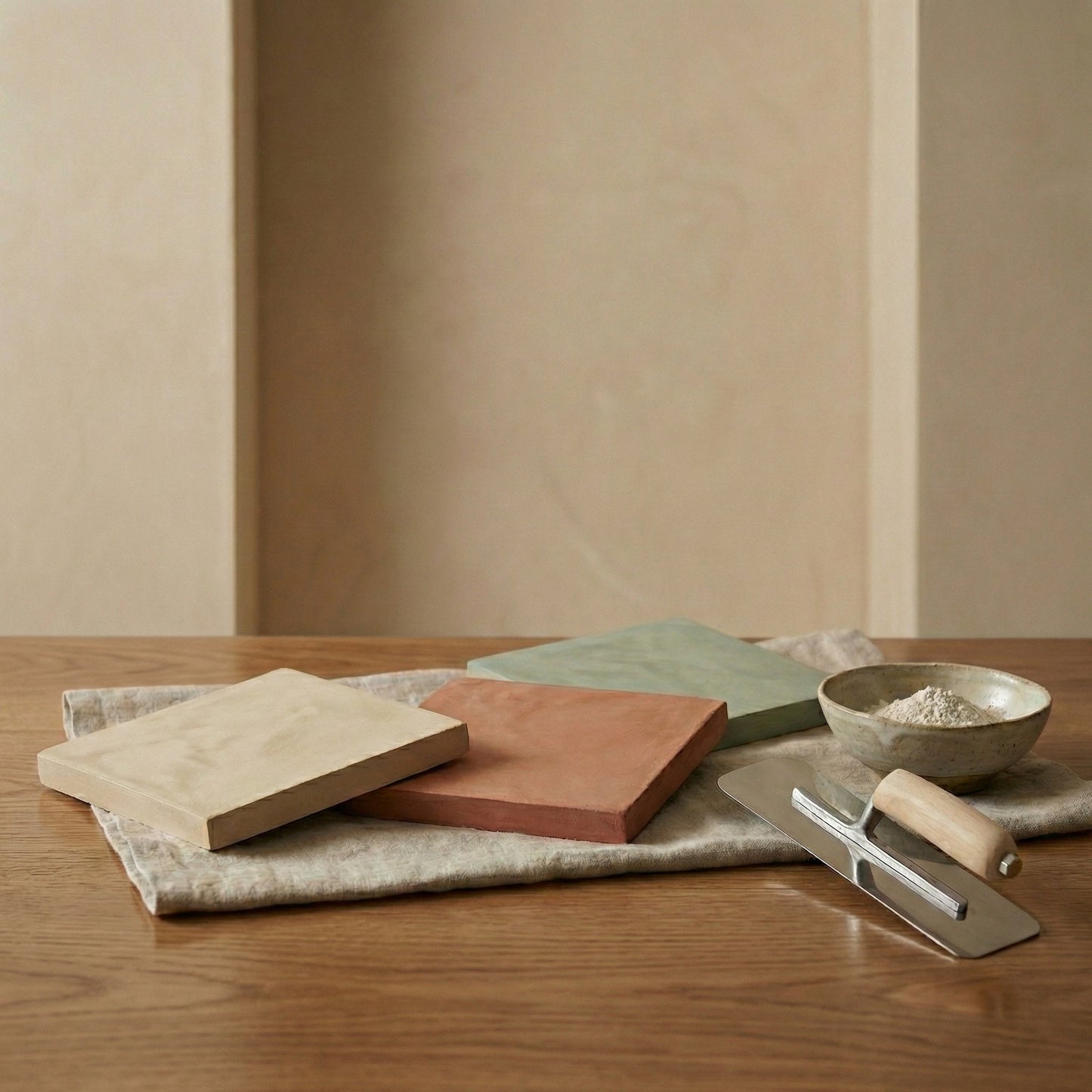
Order a 2" color chip (real plaster on wood) from the size menu above and hold it up in morning and evening light. To try the texture on a wall, pick the quart kit.
Can't decide between two shades? Email info@promasonsupply.com and we'll help you compare.
About Pediment
Pediment is inspired by the triangular gables of classical stone architecture. It is a steady, balanced "cool-mineral" grey. A subtle silty undertone gives it a refined clarity, more elevated than a standard concrete grey.
It suits offices, living rooms, and bathrooms, and classical, transitional, or modern interiors. In the middle of the value range, Pediment carries visible depth and movement without darkening a room the way a deep accent would.
Pairs well with: Galet for a deeper river-stone grey; Monolith for a true neutral grey; Stria for a light stony off-white. Compare chips side by side before you decide.
Pediment can stay a soft matte, or be burnished for more sheen. Gloss and Low Gloss sealers both add sheen; low-touch walls can go unsealed for a matte look.
A $5 two-inch Pediment color chip, made from real plaster, is the easiest way to judge it against your floors, trim, and light. For planning, one gallon kit covers about 50-75 sq ft in two coats.
A mineral alternative to paint
Color Skim is a smooth, non-sanded lime and fine marble plaster that replaces paint on interior walls. It goes on as a paper-thin skim coat with a Venetian plaster trowel and gives soft, natural color with visible movement from the trowel and a breathable mineral finish (sealing reduces breathability; see Sealing and sheen). It can be applied over primed drywall, primed concrete board, and existing plaster walls.
- Coverage: about 50–75 sq ft per gallon kit for the standard two coats. A third coat uses about 1.5 times the plaster.
- Sizes: Gallon Kit, Quart Kit, and a 2″ color chip for sampling.
- Primer: Lime Plaster Primer – Smooth on drywall and other non-mineral surfaces (about 300 sq ft per gallon).
- Sealer (optional): Lime Plaster Sealer in Gloss or Low Gloss (about 300 sq ft per gallon for the typical two coats). Both add sheen; Gloss gives more sheen than Low Gloss.
- Surfaces: interior walls only. Color Skim is not for exterior use.
What's in the kit and how to mix
Each kit has two parts: Part A, the dry plaster mix, and Part B, the liquid with colorant. The color is built into Part B, so the plaster is integrally colored. Pour Part A into Part B and mix to a smooth, lump-free paste with a drill mixer attachment designed for paint or plaster.
Color Skim has a slow set compared with gypsum skim-coat products, which gives you more working time. Under normal conditions it does not need misting or damp curing. Once mixed, the plaster stays workable for about 2 hours in normal conditions (around 70°F).
How to apply over drywall
- Prepare: bring the drywall to a smooth surface (Level 4 finish or higher is ideal), with all taping, mudding and hole-filling done.
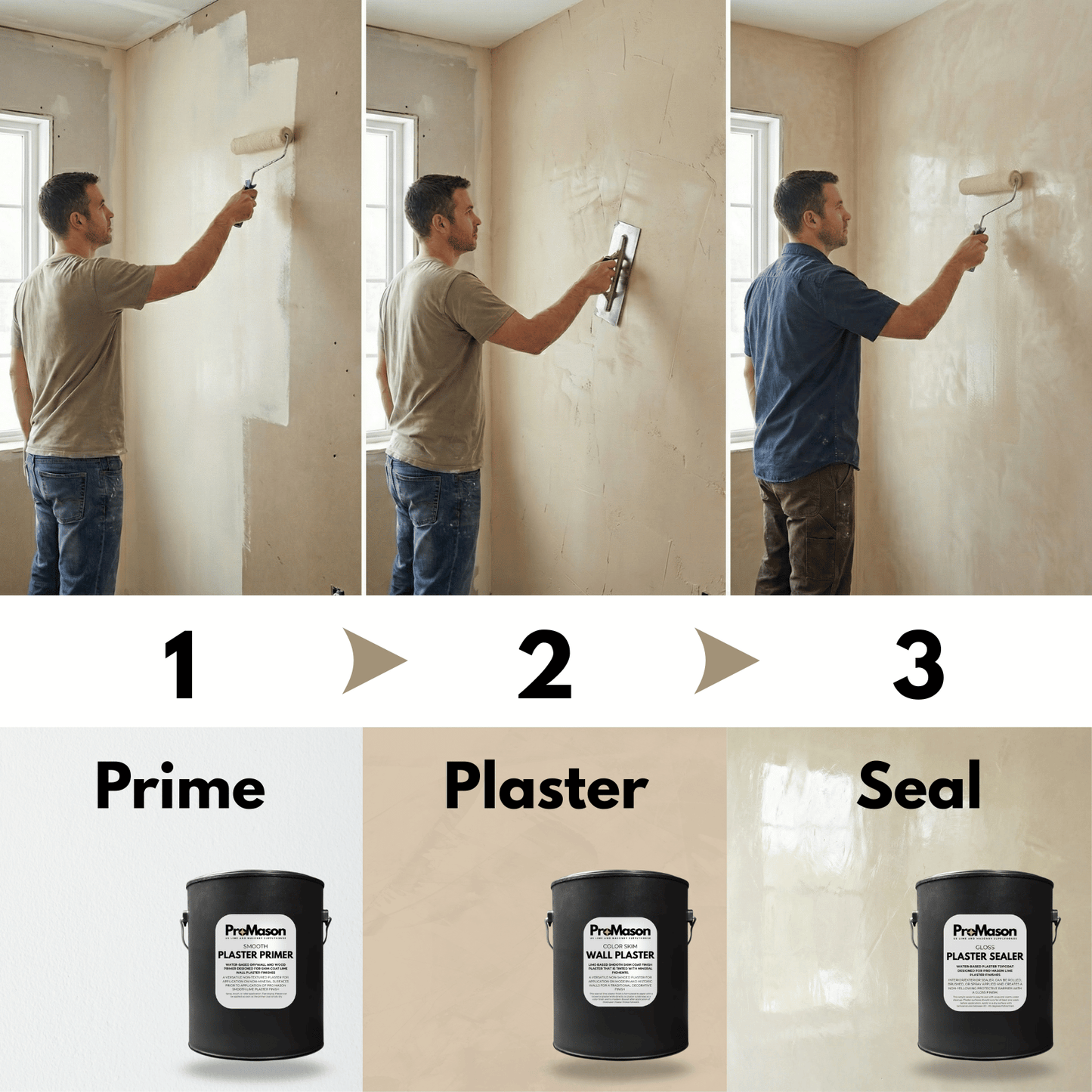
- Prime: roll on one even coat of Lime Plaster Primer – Smooth and let it dry fully.
- First coat: trowel on at 1/16″ or thinner. Don't try for full coverage or build thickness; heavy coats can crack. Several thin layers beat one thick one.
- Smooth: once dry, lightly sand with fine sandpaper or knock down high points with a plaster knife.
- Second coat: apply the second coat. In warm conditions you may mist the surface just before applying to extend working time. Don't mist finished work unless you plan to re-trowel it.
- Optional third coat and burnishing: add a third coat if needed. Once the final coat is fully dry, burnish with the trowel to raise sheen and depth, or leave it unburnished for a matte look (easier for DIY).
Keep air and surface temperatures between 55°F and 85°F (13–29°C). Ideal relative humidity is 50–75%. Color Skim is a final color finish; don't use it to build up surfaces or fill gaps.
Sealing and sheen
Seal about two weeks after the final coat. The usual range is 7 days to 3 weeks, closer to 3 weeks when drying conditions are poor. Use water-based sealers only. Apply Lime Plaster Sealer with a microfiber roller, or a paintbrush for small projects. Two coats is typical (one gallon covers about 300 sq ft for both coats). Gloss and Low Gloss both add sheen, and Gloss gives more sheen than Low Gloss. Sealing also reduces the plaster's breathability. On low-touch walls you can skip sealer to keep a matte, unsealed finish.
For wax, soap or oil finishes, wait at least 48 hours (1 week recommended).
Step-by-step help: How to apply lime plaster over drywall and Gloss vs Low Gloss vs no sealer.

Project calculator
How much Color Skim do you need?
Answer a few quick questions to plan primer, plaster, sealer and tools for Lime Wall Plaster - Color Skim 147 Pediment.
Step 1 of 5
Plaster Installation Supplies
-
Lime Plaster Primer - Smooth
Regular price From $8.00 USDRegular priceUnit price per -
Lime Plaster Sealer - Water Based
Regular price From $8.00 USDRegular priceUnit price per -
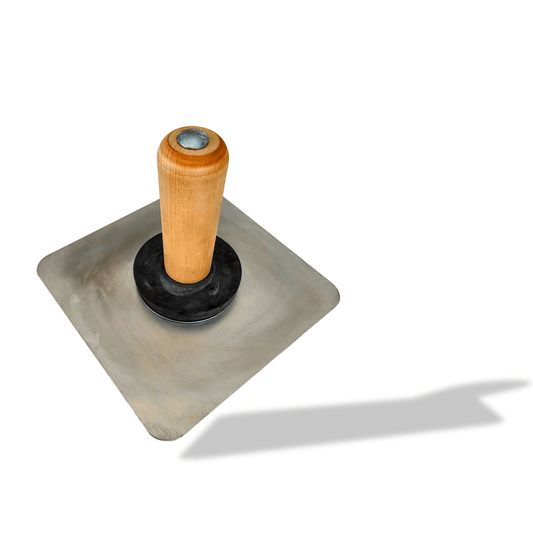
Mortar Repointing & Plastering Hawk 8" X 8"
Regular price $32.80 USDRegular priceUnit price per -
Plaster and Thinset Mixer - Jiffy 10" Drill Attachment
Regular price $28.50 USDRegular priceUnit price per



Let customers speak for us
I haven't had a chance to mix and use the mortar yet. However, the customer service is great. They immediately sent a replacement package of colorant since the original had leaked.

Our project turned out wonderful! What an amazing difference. It completely changed the look of the house!!

Easier to apply than I anticipated.
My first time staining brick and I was nervous on how it might turn out because I was going from dark brown tone bricks to gray tone (before and after photo submitted)Blended my own color combo and It looks amazing.
The stain covers well and a quart did a good amount of surface area. The perfect shade was achieved by mixing 2 colors. It looks great and is a nice brick border update!
The masonry sealer worked great. It was easy to apply and dried perfectly.

So far, so good. It will take time.
I just tried the mortar out. Need to learn a little more about using it as what I applies turned white. Yes it was sunny and hot. I tried keeping it spritzed and ended up shading the work with tarps, but too late. I’ll try again next week since I see a cloudy day in the forecast. Marie

We took down the Wood pan line in our old home. Built in 1880. All the room is red brick. Except for this one spot that it looks like they ran out. Using pro Mason stains, I was able to make coordinate better with the rest of the room. Very happy with the results! It would have been impossible to achieve without being able to dilute and combine the stains to make multiple colors to match the variants in the original bricks.
Working out great so far
This was awesome. It mixed very well, and even though its still curing, it is very hard now. It was also fun to mix up a mortar by hand the same way they used to do back in the day.
I had my steps repointed but they were way to light and slot of cement left on the brick. These stains worked amazing. Darkened the mortar and made the bricks look new!! Love this product! I used dark buff for the mortar and mixed burgundy and dark red for my brick.
Excellent experience with all questions answered!
I purchased a type-o mortar concentrate and am very satisfied with the speed of receipt and overall quality of the final product. I particularly appreciated the clear instructions that came with the product that took any guess work out of the picture. I am a homeowner and not a professional mason but this company has allowed me to make reasonable repairs to my chimney brick work with confidence.
A very nice product, really looks great to brighten up older bricks. AAA+++
Excellent product, and helpful tips from ProMason Supply! Thank you, the lime Morter works perfectly for our historic 130 year old home, we have some major tuck pointing and repairs to the masonry to do. your company and product is very appreciated!
